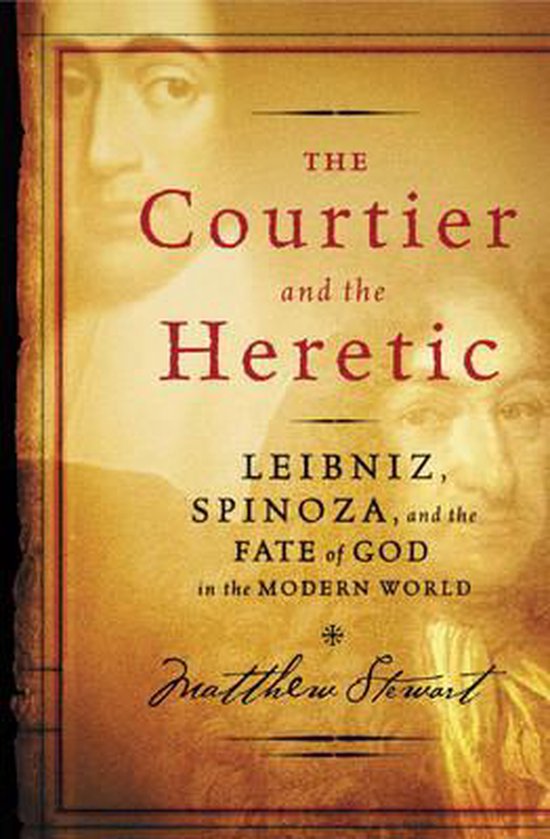
9780393058987 - The Courtier and the Heretic

The Courtier and the Heretic

The Courtier and the Heretic by Matthew Stewart is a profound exploration of the lives and philosophies of two towering figures of the 17th century: Gottfried Wilhelm Leibniz and Baruch Spinoza. This book delves into their contrasting worldviews, with Leibniz advocating for a universe governed by a benevolent God and pre-established harmony, while Spinoza proposed a pantheistic system where God and nature are one. Stewart masterfully weaves together their intellectual battles, personal struggles, and the historical context of the Enlightenment, highlighting how their ideas clashed over issues like free will, the nature of God, and the foundations of ethics. Through vivid narratives, the book reveals Leibniz's role as a courtier seeking to reconcile science and religion, and Spinoza's life as a heretic challenging orthodox beliefs, ultimately shaping modern philosophy. The author provides deep insights into their correspondence, the impact of their works on subsequent thinkers, and the enduring relevance of their debates in today's discussions on rationality and spirituality. With meticulous research and engaging prose, Stewart makes complex philosophical concepts accessible, offering readers a compelling journey into the minds of these geniuses and their lasting legacies in Western thought.

Beschikbare exemplaren

€18.95
ALS NIEUW
Auteur Matthew Stewart
ISBN 9780393058987
Bindwijze Hardcover
Tags history Biography philosophy Enlightenment 17th Century intellectual history Spinoza Leibniz rationalism pantheism

The Courtier and the Heretic by Matthew Stewart is an intellectually stimulating work that excels in bringing the philosophical duel between Leibniz and Spinoza to life. One of its strongest points is Stewart's ability to present dense philosophical ideas in an engaging and accessible manner, making it suitable for both scholars and general readers interested in the history of ideas. The narrative is richly detailed, with vivid portrayals of the historical context and personal lives of the philosophers, which adds depth and humanity to their abstract theories. However, a weakness lies in the occasional oversimplification of complex arguments, which might leave some expert readers wanting more rigorous analysis. Additionally, the book sometimes leans heavily on biographical elements, potentially diverting attention from the core philosophical debates. Despite this, Stewart's balanced approach in highlighting both the strengths and flaws of each thinker's worldview is commendable, fostering a nuanced understanding of their contributions. The prose is clear and compelling, though at times the pacing can feel slow during detailed historical digressions. Overall, this book is a valuable resource for anyone seeking to grasp the roots of modern philosophy, though it may not satisfy those looking for an in-depth technical critique.

The Courtier and the Heretic by Matthew Stewart chronicles the intertwined lives and philosophical conflicts of Gottfried Wilhelm Leibniz and Baruch Spinoza during the 17th century. The book begins by setting the stage in the tumultuous era of the Enlightenment, where new ideas about reason, God, and the universe were emerging. Leibniz, a diplomat and optimist, believed in a world created by a perfect God where everything happens for the best, as outlined in his theory of pre-established harmony. In contrast, Spinoza, living as an outcast due to his radical views, argued that God is identical with nature, denying personal divinity and advocating for a deterministic universe. Stewart details their indirect interactions through letters and mutual acquaintances, exploring how Spinoza's pantheism challenged Leibniz's theistic optimism. Key events include Leibniz's attempts to engage with Spinoza's ideas, the publication of Spinoza's Ethics, and the broader intellectual repercussions that influenced figures like Kant and Hegel. The narrative builds to a climax in their philosophical clash over free will, ethics, and the nature of reality, ultimately showing how their legacies paved the way for modern secular and rationalist thought. Through this engaging account, Stewart emphasizes the enduring impact of their debate on contemporary philosophy and science.