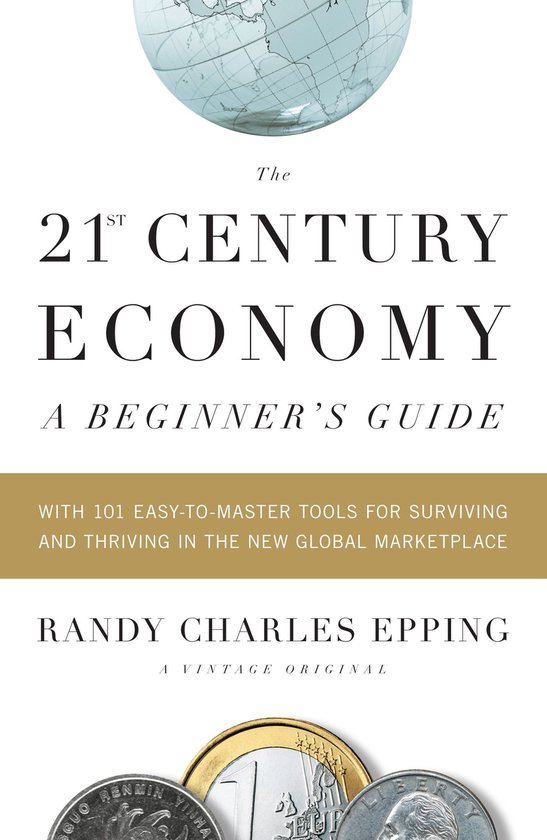
9780307387905 - The 21st-Century Economy

The 21st-Century Economy

In 'The 21st-Century Economy: A Beginner's Guide', Randy Charles Epping offers a comprehensive and accessible exploration of the complex forces shaping our modern economic world. This book is designed for readers who want to understand the key concepts, trends, and challenges of the global economy without getting lost in academic jargon. Epping covers a wide range of topics, including globalization, technological innovation, financial markets, income inequality, and the role of government in regulating economic activity. He explains how the digital revolution, the rise of emerging markets, and the increasing interconnectedness of nations have transformed the way we work, trade, and live. The book also delves into pressing issues such as climate change, automation, and the future of work, providing readers with the tools to think critically about economic policy and its impact on society. With clear explanations, real-world examples, and a user-friendly structure, Epping makes economics relevant and engaging for everyone from students to business professionals to curious citizens. Whether you're looking to make sense of the stock market, understand the implications of trade wars, or simply want to be more informed about the economic forces that shape your daily life, this guide offers a solid foundation. It demystifies complex concepts like GDP, inflation, and monetary policy, and shows how they connect to broader social and political issues. By the end of the book, readers will have a clearer understanding of how the 21st-century economy works and how they can navigate its challenges and opportunities.
Beschikbare exemplaren

€17.95
GOED
Auteur Randy Charles Epping
ISBN 9780307387905
Bindwijze Paperback
Tags globalization financial markets 21st-century economy economics beginner guide Randy Charles Epping

Randy Charles Epping's 'The 21st-Century Economy: A Beginner's Guide' is a commendable effort to make economics accessible to a broad audience. One of the book's greatest strengths is its clarity; Epping avoids unnecessary jargon and explains complex ideas in a straightforward manner. The use of real-world examples, such as the impact of the 2008 financial crisis and the rise of the gig economy, helps readers connect theory to practice. Additionally, the book is well-structured, with each chapter building on the previous one, making it easy for beginners to follow. However, the book has some weaknesses. At times, it oversimplifies certain topics, such as the causes of inequality, which may leave readers wanting a deeper analysis. Also, while the book covers a wide range of subjects, some sections feel rushed, particularly the discussion of environmental economics. The writing style, though clear, can be a bit dry, lacking the narrative flair that could make the subject more engaging. Despite these shortcomings, 'The 21st-Century Economy' serves as an excellent primer for anyone looking to understand the basic forces shaping our world. It is particularly useful for students who need a quick overview of key economic concepts or for professionals in non-economic fields who want to make sense of economic news. Overall, Epping succeeds in demystifying the economy, but readers seeking depth should supplement this book with more advanced texts.

'The 21st-Century Economy: A Beginner's Guide' by Randy Charles Epping provides a thorough overview of the key economic trends and challenges of our time. The book begins by introducing the concept of globalization, explaining how trade, investment, and technology have integrated markets and created new opportunities and risks. Epping then explores the digital revolution, discussing how the internet, artificial intelligence, and automation are reshaping industries and labor markets. He addresses the rise of emerging economies, particularly China and India, and their impact on global power dynamics. The book also examines financial markets, including the role of central banks, the causes of financial crises, and the regulation of banking systems. Inequality is a major theme, with chapters analyzing the widening gap between rich and poor and its social consequences. Epping discusses policy responses, such as taxation, welfare programs, and education reform. Environmental challenges, including climate change and resource depletion, are covered in the context of sustainable development and green growth. The book concludes with a look at the future, considering issues like the future of work, the potential of universal basic income, and the role of international cooperation. Throughout, Epping emphasizes the interconnectedness of economic, political, and social factors, encouraging readers to think holistically. He provides clear explanations of key terms like GDP, inflation, and monetary policy, and uses case studies to illustrate how these concepts play out in the real world. The summary effectively captures the book's scope, making it a valuable resource for anyone seeking a foundational understanding of 21st-century economics.