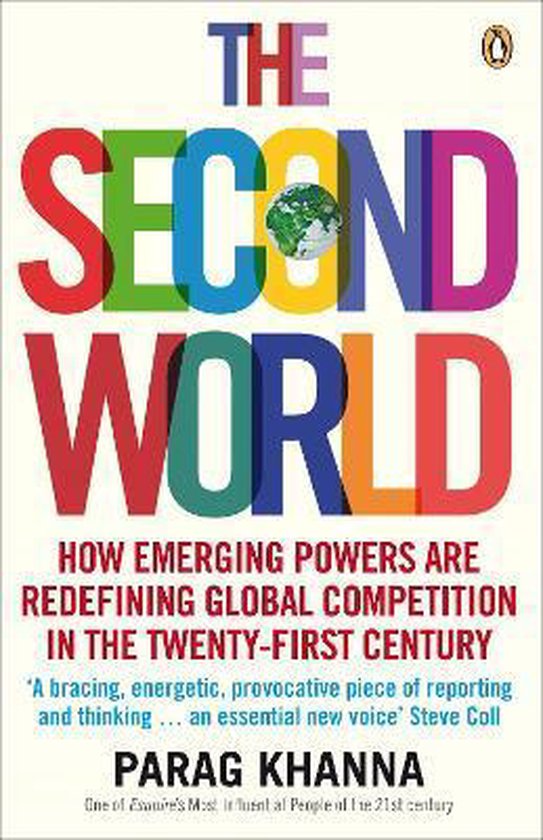
9780141027784 - The Second World

The Second World

The Second World: Empires and Influence in the New Global Order by Parag Khanna is a compelling exploration of the shifting dynamics in global power structures, focusing on the rise of emerging nations and their impact on international relations. Published in 2008, this book delves into how countries in the 'second world'—such as Brazil, Russia, India, China, and others—are navigating the complexities of globalization, economic development, and geopolitical strategies. Khanna, a renowned geopolitical strategist, argues that the traditional bipolar world dominated by the United States and Europe is giving way to a multipolar system where these second-world nations play pivotal roles. He provides detailed analyses of regional case studies, examining how factors like natural resources, demographic trends, and technological advancements influence their trajectories. The book emphasizes the importance of soft power, diplomacy, and economic alliances in shaping the future global order, offering insights into potential conflicts and collaborations. Through vivid narratives and empirical data, Khanna illustrates how these nations are leveraging their unique positions to challenge established powers, making it an essential read for anyone interested in contemporary geopolitics and international affairs. The author's accessible writing style makes complex topics approachable, encouraging readers to rethink conventional views on global dominance and cooperation.

Beschikbare exemplaren

€7.95
GOED
Auteur Parag Khanna
ISBN 9780141027784
Bindwijze Paperback
Tags Geopolitics International Relations globalization emerging economies Parag Khanna

The Second World by Parag Khanna receives high praise for its insightful analysis and timely relevance in understanding global power shifts. One of its strongest points is the comprehensive coverage of diverse regions, from Latin America to Asia, which provides a holistic view of emerging economies and their strategic importance. Khanna's ability to synthesize complex geopolitical theories with real-world examples makes the book engaging and educational, appealing to both scholars and general readers. However, some critics note that the rapid pace of global change since its publication in 2008 may have dated certain predictions, such as the specific trajectories of countries like Russia or China, which have evolved in unexpected ways. Additionally, while the book excels in broad strokes, it occasionally lacks in-depth statistical backing for some assertions, potentially leaving readers wanting more empirical evidence. On the positive side, the emphasis on soft power and diplomatic strategies offers valuable lessons for policymakers and businesses looking to navigate international markets. The writing is clear and persuasive, though at times it can feel overly optimistic about the potential for cooperation among second-world nations, overlooking persistent tensions and conflicts. Overall, this book is a must-read for its forward-thinking perspective, but readers should supplement it with more recent analyses to account for contemporary developments.

The Second World by Parag Khanna provides a detailed summary of the evolving global landscape, where emerging nations are reshaping international power dynamics. The book begins by defining the 'second world' as countries that are not fully developed like the first world nor underdeveloped like the third world, focusing on nations such as Brazil, Russia, India, and China. Khanna explores their economic growth, political strategies, and cultural influences, arguing that they are creating a new multipolar world order. He delves into regional analyses, discussing how Latin America's resource wealth, Asia's manufacturing prowess, and the Middle East's geopolitical significance contribute to this shift. The narrative covers historical contexts, such as the decline of Western hegemony, and projects future scenarios where these nations could lead in areas like technology and diplomacy. Key themes include the role of energy resources, demographic changes, and the impact of globalization on local identities. Khanna emphasizes that these countries are not merely followers but active shapers of global norms, often through alliances and soft power rather than military might. The book concludes by highlighting the uncertainties and opportunities in this transition, urging readers to understand these changes for better global engagement and policy-making. Through compelling storytelling, it paints a vivid picture of a world in flux, where old powers must adapt or risk irrelevance.