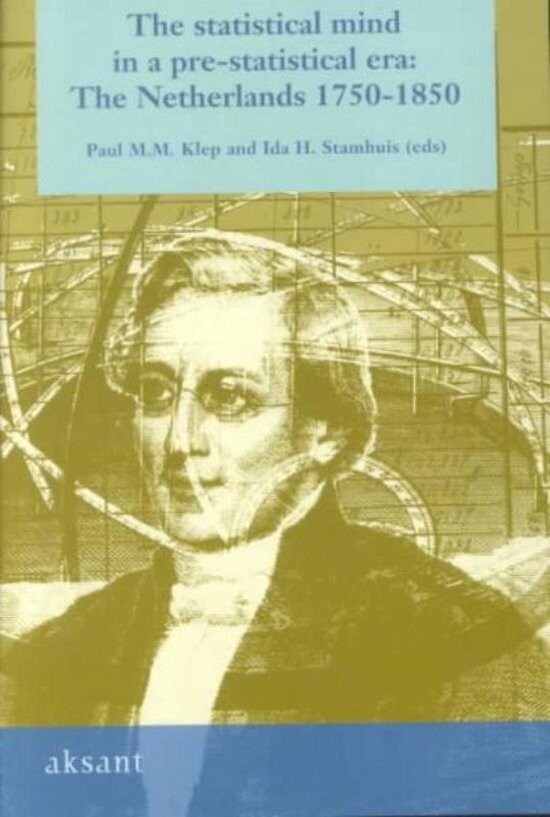
9789057420344 - The Statistical Mind in a Pre-Statistical Era

The Statistical Mind in a Pre-Statistical Era

  • Auteur
  • Uitgeverij-
  • Jaar-

The Statistical Mind in a Pre-Statistical Era is a profound exploration of how early thinkers grappled with concepts of data and probability long before the formal establishment of statistics as a discipline. This book delves into historical contexts, examining the intellectual landscapes of ancient civilizations, medieval scholars, and Renaissance innovators who laid the groundwork for modern statistical thought. Through meticulous research, it uncovers how these pioneers used rudimentary methods to analyze patterns, make predictions, and understand variability in natural and social phenomena. The narrative weaves together stories from diverse fields such as astronomy, economics, and medicine, highlighting how early statistical ideas influenced decision-making and scientific inquiry. Readers will gain insights into the evolution of quantitative reasoning, from simple counting and record-keeping to more complex probabilistic theories. The book emphasizes the human aspect of this journey, portraying the struggles and triumphs of individuals who dared to quantify the uncertain. By connecting past methodologies with contemporary statistical practices, it offers a rich, educational experience that underscores the timeless relevance of data-driven thinking. This work is not just a historical account but a tribute to the enduring quest for knowledge and the power of numbers in shaping our understanding of the world.

Beschikbare exemplaren

€23.95
GOED
Naam op voorblad geschreven. Verder is het boek in prima staat.

The Statistical Mind in a Pre-Statistical Era excels in its thorough historical analysis and engaging storytelling, making complex ideas accessible to a broad audience. One of its strongest points is the detailed examination of lesser-known figures and their contributions, which adds depth and novelty to the narrative. The book effectively bridges the gap between ancient and modern thought, illustrating how early statistical concepts have evolved and remain relevant today. However, it has some weaknesses, such as occasional dense passages that may challenge readers without a background in history or mathematics, potentially limiting its appeal. Additionally, the lack of visual aids or diagrams could make certain statistical explanations harder to grasp for visual learners. Despite these drawbacks, the author's passion for the subject shines through, and the comprehensive research provides a solid foundation for understanding the roots of statistical science. The book encourages critical thinking and reflection on how data has shaped human progress, making it a valuable resource for students, historians, and anyone interested in the history of science. Overall, it is a well-researched and thought-provoking work that, while not perfect, offers significant insights and is highly recommended for its educational value.

The Statistical Mind in a Pre-Statistical Era chronicles the development of statistical thinking from ancient times to the pre-modern era, focusing on how early societies and intellectuals approached data analysis without formal statistical tools. It begins by exploring primitive methods of counting and record-keeping in civilizations like Mesopotamia and Egypt, where numerical data was used for administrative and astronomical purposes. As the narrative progresses, it delves into the contributions of Greek philosophers, medieval scholars, and Renaissance thinkers who introduced concepts of probability, averages, and variability. Key figures and their ideas are highlighted, showing how these early efforts paved the way for later statistical innovations. The book covers various domains, including economics, where trade and taxation relied on numerical assessments, and science, where observations of natural phenomena led to early hypotheses about patterns and randomness. Throughout, it emphasizes the gradual shift from qualitative to quantitative reasoning, illustrating how statistical mindsets emerged in response to practical needs and intellectual curiosity. By the end, readers are left with a comprehensive understanding of the historical journey that set the stage for modern statistics, underscoring the importance of this evolution in shaping contemporary data-driven societies.