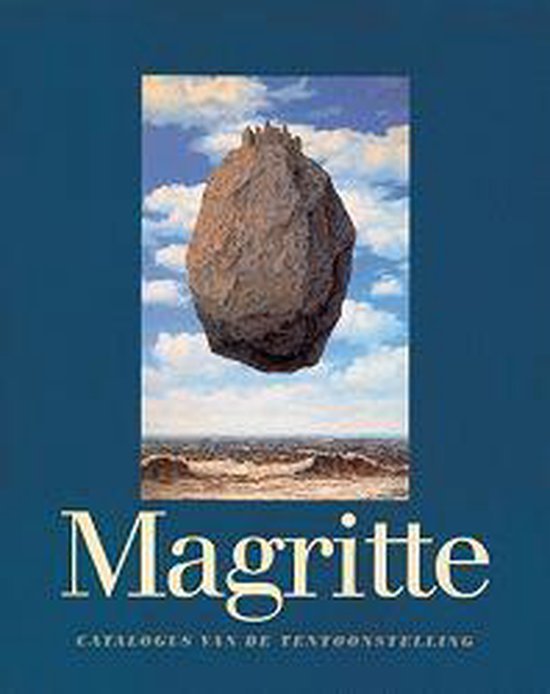
9789055441297 - Rene Magritte 1898-1967 - OLLINGER - ZINQUE, Gisèle; LEEN, Frederik

Rene Magritte 1898-1967 - OLLINGER - ZINQUE, Gisèle; LEEN, Frederik

This comprehensive monograph on René Magritte, published in 1998 to commemorate the centenary of his birth, offers an exhaustive exploration of the Belgian surrealist's life and work. Authored by Gisèle Ollinger-Zinque and Frederik Leen, both esteemed curators at the Royal Museums of Fine Arts of Belgium, the book delves into Magritte's artistic evolution from his early Impressionist and Cubist experiments to his iconic surrealist masterpieces. The text is richly illustrated with high-quality reproductions of paintings, drawings, and archival photographs, providing readers with a visual feast that complements the scholarly analysis. The authors situate Magritte within the broader context of 20th-century art, examining his relationships with other surrealists like André Breton and his influence on pop art and conceptual art. Special attention is given to Magritte's philosophical inquiries into the nature of reality, representation, and language, as seen in works like 'The Treachery of Images' and 'The Son of Man'. The book also includes a detailed chronology of the artist's life, a bibliography, and an index, making it an invaluable resource for both casual admirers and serious researchers. With its blend of academic rigor and accessible prose, this volume stands as a definitive reference on one of the most enigmatic figures in modern art.

Beschikbare exemplaren

€13.95
GOED
Auteur Onbekend
ISBN 9789055441297
Bindwijze Hardcover
Tags art monograph surrealism René Magritte Belgian art

Gisèle Ollinger-Zinque and Frederik Leen's 'René Magritte 1898-1967' is a masterful tribute to the surrealist genius, offering a thorough and visually stunning overview of his oeuvre. The book's greatest strength lies in its meticulous curation of images, which are reproduced with exceptional clarity and fidelity. The accompanying text is both insightful and engaging, skillfully weaving biographical details with art-historical analysis. The authors excel in decoding Magritte's complex symbolism and his playful subversion of visual conventions. However, the book's scholarly density may prove overwhelming for casual readers seeking a lighter introduction. Additionally, while the chronology is comprehensive, it occasionally reads like a dry list of facts rather than a narrative. Despite these minor shortcomings, this volume is an essential addition to any art lover's library, providing a deep and rewarding exploration of Magritte's world. The inclusion of lesser-known works and archival materials adds significant value, offering fresh perspectives even for those familiar with his most famous pieces. Overall, it is a commendable effort that balances academic rigor with aesthetic pleasure.

René Magritte (1898-1967) was a Belgian surrealist artist whose thought-provoking paintings challenged the boundaries between reality and illusion. Born in Lessines, Belgium, Magritte's childhood was marked by tragedy when his mother committed suicide by drowning—an event that would later influence his motif of veiled faces and submerged figures. After studying at the Académie Royale des Beaux-Arts in Brussels, he worked as a commercial artist to support himself. In the 1920s, he discovered the work of Giorgio de Chirico, which inspired him to adopt a surrealist style. His first solo exhibition in 1927 was poorly received, prompting a move to Paris where he joined the surrealist circle led by André Breton. There, he developed his signature style of depicting ordinary objects in unexpected contexts, such as in 'The Treachery of Images' (1929), which famously declares 'This is not a pipe.' Returning to Brussels in 1930, Magritte continued to produce enigmatic works during the Great Depression and World War II, experimenting with styles like his 'Renoir period' and 'vache period.' Post-war, his work gained international recognition, influencing pop art and conceptual art. Magritte's recurrent motifs—bowler hats, apples, clouds, and windows—explored themes of concealment, representation, and the gap between language and reality. He died in 1967, leaving behind a legacy as one of the most influential surrealists. This book chronicles his entire career, from his early experiments to his late works, illuminating his unique vision and enduring impact on modern art.