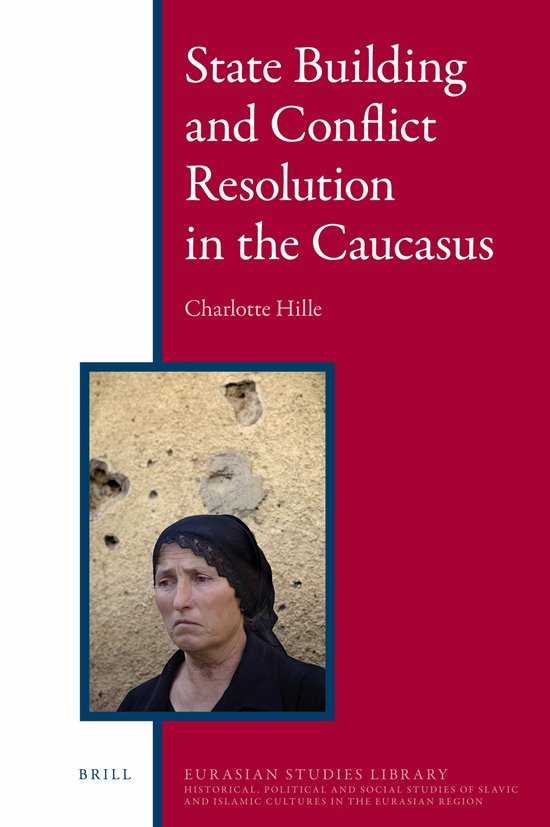
9789004179011 - Eurasian Studies Library1- State Building and Conflict Resolution in the Caucasus

Eurasian Studies Library1- State Building and Conflict Resolution in the Caucasus

In 'State Building and Conflict Resolution in the Caucasus', Charlotte Hille offers a comprehensive analysis of the complex interplay between state building and conflict resolution in the Caucasus region. The book delves into the historical, political, and social dynamics that have shaped the post-Soviet Caucasus, focusing on the roles of regional and international actors. Hille examines the challenges of constructing stable states amidst secessionist movements, ethnic tensions, and geopolitical rivalries. Through detailed case studies of Georgia, Armenia, Azerbaijan, and the unrecognized entities of Abkhazia, South Ossetia, and Nagorno-Karabakh, the author highlights the failures and successes of conflict resolution efforts. The book argues that sustainable peace requires not only diplomatic agreements but also inclusive state institutions that address the grievances of minority groups. Hille’s analysis is grounded in extensive field research and interviews with key stakeholders. This volume is essential for scholars and practitioners interested in the Caucasus, post-Soviet transitions, and the broader field of conflict studies. It provides a nuanced understanding of why some conflicts remain frozen while others escalate, offering insights into the conditions necessary for lasting peace. The book also critiques the international community's inconsistent engagement, emphasizing the need for a coherent strategy that balances sovereignty with human rights. With its interdisciplinary approach, 'State Building and Conflict Resolution in the Caucasus' contributes significantly to the literature on state formation, nationalism, and peacebuilding in complex multiethnic regions.
Beschikbare exemplaren

€24.95
GOED
Auteur Charlotte Hille
ISBN 9789004179011
Bindwijze Hardcover
Tags conflict resolution Caucasus State Building Post-Soviet Ethnic Conflict

Charlotte Hille's 'State Building and Conflict Resolution in the Caucasus' is a meticulous and insightful work that sheds light on one of the world's most volatile regions. The book's greatest strength lies in its thorough examination of the interplay between internal state-building processes and external conflict resolution mechanisms. Hille masterfully weaves together historical context, political analysis, and on-the-ground observations. The case studies are well-chosen and provide depth to the theoretical arguments. However, the book can be dense and occasionally repetitive, which may challenge readers unfamiliar with the region. While Hille offers a critical perspective on international involvement, her analysis sometimes lacks a clear prescription for moving forward. The focus on elite-level negotiations overshadows grassroots peacebuilding efforts, leaving a gap in understanding local dynamics. Additionally, the book's publication date (2010) means it does not cover recent developments, such as the 2020 Nagorno-Karabakh war. Despite these limitations, this volume remains a valuable resource for those seeking a comprehensive overview of the Caucasus conflicts. It is particularly recommended for graduate students and policymakers who need a solid foundation in the region's complex issues. Hille's balanced approach, avoiding simplistic narratives, makes this a commendable contribution to Eurasian studies.

'State Building and Conflict Resolution in the Caucasus' by Charlotte Hille explores the intricate processes of state formation and conflict management in the post-Soviet Caucasus. The book begins by setting the historical context, detailing the collapse of the Soviet Union and the subsequent emergence of new independent states. Hille then examines the concept of state building, emphasizing the challenges of constructing viable political institutions in multiethnic societies where borders often do not align with ethnic divisions. The core of the book is devoted to case studies of Georgia, Armenia, and Azerbaijan, as well as the breakaway regions of Abkhazia, South Ossetia, and Nagorno-Karabakh. For each case, Hille analyzes the root causes of conflict, the attempts at resolution through negotiations and international mediation, and the impact of external actors like Russia, the United States, and European organizations. She highlights the failures of top-down approaches and the importance of inclusive governance. The book concludes with a comparative assessment of conflict resolution outcomes, arguing that sustainable peace requires addressing both institutional deficiencies and identity-based grievances. Hille critiques the international community's inconsistent and often self-serving involvement. While recognizing the difficulty of resolving frozen conflicts, she advocates for a more holistic strategy that combines diplomatic efforts with grassroots initiatives. The summary underscores the book's central thesis: that state building and conflict resolution are inextricably linked, and that neglecting one undermines the other. This work is a vital resource for understanding the Caucasus's ongoing struggles and offers lessons for conflict regions worldwide.