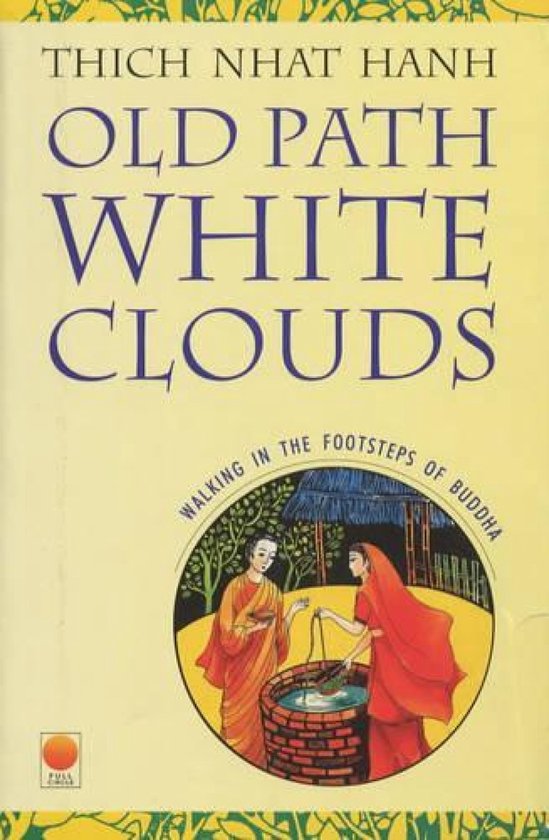
9788121606752 - Old Path White Clouds

Old Path White Clouds

Old Path White Clouds is a remarkable book by Thich Nhat Hanh that presents the life and teachings of the Buddha in a vivid and accessible way. Written in a narrative style, the book follows the journey of Siddhartha Gautama from his princely life to his enlightenment and eventual role as a teacher. Through the eyes of a young buffalo boy named Svasti, readers experience the Buddha's daily life and profound wisdom. The book seamlessly blends stories of the Buddha's past lives, known as Jataka tales, with his core teachings on mindfulness, compassion, and impermanence. Thich Nhat Hanh's gentle prose brings ancient India to life, making the Buddha's message relevant to modern readers. Each chapter offers insights into the Four Noble Truths, the Noble Eightfold Path, and the practice of meditation. The book also explores the relationship between the Buddha and his disciples, including Ananda, Sariputta, and Mahakassapa. With its rich detail and spiritual depth, Old Path White Clouds serves as both a biography and a guide to living a mindful life. It emphasizes the importance of walking the path of peace and understanding. The book's title itself evokes the image of walking on an ancient path while watching white clouds drift by, symbolizing the transient nature of existence. Thich Nhat Hanh's translation of ancient texts into engaging stories makes this book a treasure for both newcomers and seasoned practitioners of Buddhism. Over 300 pages, readers are transported to a time of great spiritual awakening. The book also includes appendixes with additional teachings and a glossary of terms. It is a must-read for anyone seeking a deeper understanding of Buddhism and the life of its founder.

Beschikbare exemplaren

€13.95
GOED
Auteur Hanh Thich Nhat
ISBN 9788121606752
Bindwijze Paperback
Tags Mindfulness Thich Nhat Hanh Buddhism Buddha biography

Old Path White Clouds is a masterpiece of spiritual literature. Thich Nhat Hanh's ability to weave the Buddha's life story with profound teachings makes this book both educational and inspiring. The narrative is captivating, drawing readers into the world of ancient India. One of the book's greatest strengths is its accessibility; complex Buddhist concepts are explained in simple, relatable terms. The characters, including the Buddha and his disciples, are portrayed with warmth and humanity. The inclusion of Jataka tales adds depth and moral lessons. However, some readers may find the pacing slow in parts, as the book covers extensive detail. Additionally, those seeking a purely historical account might be disappointed, as the book blends legend with history. Nonetheless, the spiritual insights are invaluable. The book encourages mindfulness and compassion in daily life. Thich Nhat Hanh's writing style is poetic yet clear, making it a joy to read. The book's only weakness is its length; at over 600 pages, it may seem daunting. But every page is worth it. Overall, Old Path White Clouds is a highly recommended read for anyone interested in Buddhism, mindfulness, or simply a good story. It has the power to transform one's perspective on life. I give it five stars for its depth and beauty.

Old Path White Clouds tells the story of the Buddha's life from birth to death, as narrated to the buffalo boy Svasti. The book begins with the Buddha's childhood as Prince Siddhartha, his encounters with suffering, and his decision to leave the palace in search of truth. It describes his six years of ascetic practices, his realization of the Middle Way, and his enlightenment under the Bodhi tree. Following his awakening, the Buddha delivers his first sermon at Sarnath and establishes the Sangha. The narrative follows his journeys across India, teaching the Dharma to people from all walks of life, including kings, merchants, and outcasts. Key events include the conversion of Sariputta and Moggallana, the founding of the order of nuns, and the Buddha's visit to his family. The book also delves into the Jataka tales, stories of the Buddha's previous lives, which illustrate virtues like generosity and patience. As the Buddha ages, he continues to teach until his final days, when he enters Parinirvana at Kusinara. Throughout the book, Thich Nhat Hanh emphasizes the Buddha's teachings on mindfulness, impermanence, and compassion. The story is not just a biography but a guide to living a life of peace and understanding. The buffalo boy Svasti serves as a symbol of the common person who can attain wisdom through following the Buddha's path. The book concludes with the Buddha's last words: 'Be a lamp unto yourselves.' It is a comprehensive and moving account of the Buddha's life and legacy.