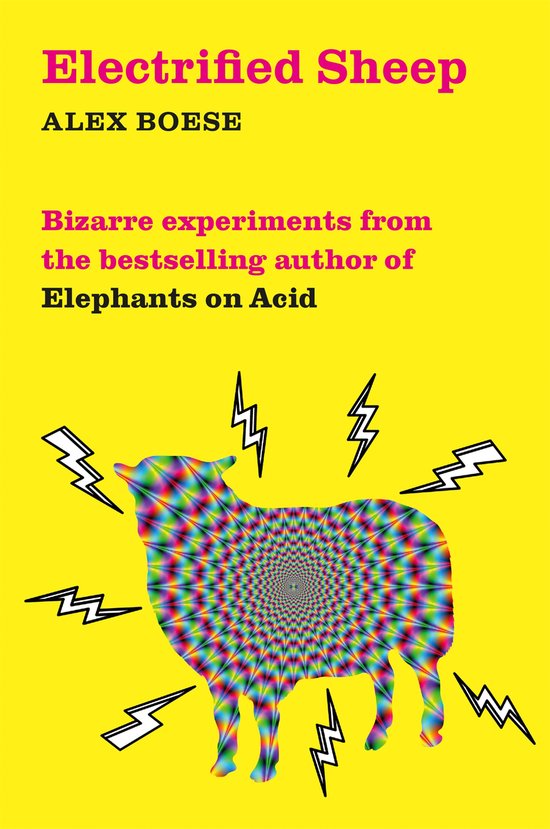
9781509843053 - Electrified Sheep

Electrified Sheep

Discover the fascinating and often bizarre world of scientific experiments with 'Electrified Sheep' by Alex Boese. This captivating book delves into some of the most unusual and astonishing experiments ever conducted, ranging from the macabre to the downright hilarious. Boese, known for his knack for uncovering the weirdest corners of science, takes readers on a journey through history, exploring experiments that pushed the boundaries of ethics, curiosity, and human endurance. From attempts to electrify a sheep to prove the nature of electricity, to studies on the effects of isolation, and even efforts to teach a dog to talk, each chapter reveals the lengths to which scientists have gone in pursuit of knowledge. The book is not just a collection of oddities; it also provides context, explaining the scientific principles behind these experiments and their impact on modern science. Boese's engaging writing style makes complex topics accessible, blending humor with insightful analysis. Whether you're a science enthusiast or just love a good story, 'Electrified Sheep' will entertain and educate, leaving you with a newfound appreciation for the strange and wonderful world of scientific inquiry. This book is a must-read for anyone curious about the history of science and the human drive to understand the world, no matter how unconventional the methods.

Beschikbare exemplaren

€8.95
GOED
Auteur Alex Boese
ISBN 9781509843053
Bindwijze Paperback
Tags Humor science history popular science weird experiments electrified sheep

'Electrified Sheep' is a delightfully quirky exploration of science's strangest experiments. Alex Boese has a talent for unearthing obscure historical studies and presenting them in an engaging, accessible manner. The book's strength lies in its storytelling; each experiment is narrated with vivid detail, making you feel like you're right there in the lab (or the field, or the dungeon). The chapters on early electrical experiments and psychological studies are particularly fascinating. However, some readers might find the tone occasionally too flippant for serious scientific discussion, and the lack of in-depth analysis may leave hardcore science buffs wanting more. The structure, while chronological, sometimes feels disjointed as Boese jumps between topics. Despite these minor flaws, the book is highly entertaining and informative. It successfully balances humor with education, making it perfect for casual readers. The inclusion of lesser-known experiments is a major plus, offering fresh perspectives on the history of science. Overall, 'Electrified Sheep' is a recommended read for anyone looking to expand their knowledge in an unconventional way. It earns a solid four stars for its originality and entertainment value.

'Electrified Sheep' by Alex Boese is a captivating journey through the most peculiar experiments in scientific history. The book opens with the titular experiment: in the 18th century, French scientist Abbé Nollet electrified a line of monks to demonstrate the speed of electricity, but the most famous oddity is the attempt to electrify a dead sheep to prove animal electricity. Boese then takes readers through a series of bizarre studies, including experiments on human isolation in sensory deprivation tanks, efforts to teach a dog named 'Clever Hans' to communicate, and the notorious Stanford prison experiment. Each chapter reveals the motivations behind these experiments, often driven by curiosity, ambition, or sheer madness. The book also covers more recent studies, such as attempts to create a 'cyborg' cockroach and the use of virtual reality to study human behavior. Throughout, Boese highlights the ethical dilemmas and societal impacts of these experiments, questioning where the line between science and spectacle lies. The narrative is both humorous and thought-provoking, showing how even the strangest experiments have contributed to our understanding of the world. From the ridiculous to the profound, 'Electrified Sheep' offers a unique perspective on the scientific method and the human condition. It's a celebration of the weird and wonderful, reminding us that science is not always a serious endeavor but often a playground for the curious mind.