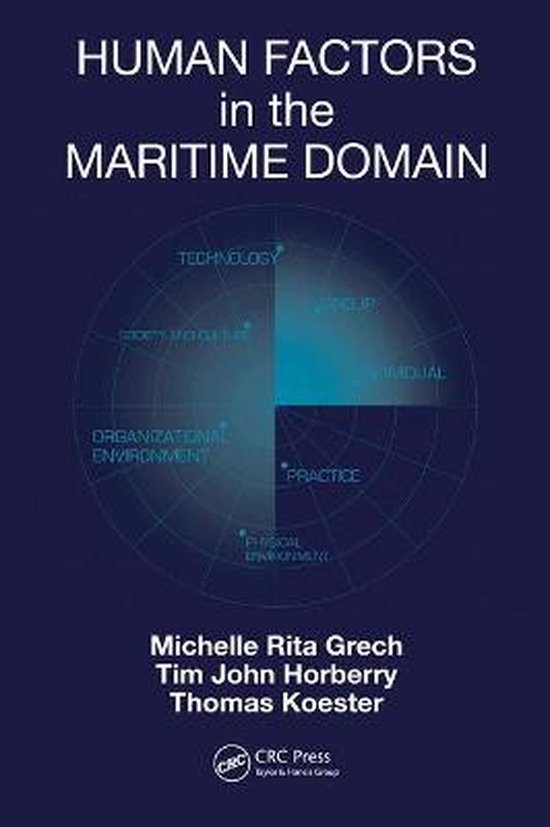
9781420043419 - Human Factors in the Maritime Domain

Human Factors in the Maritime Domain

Human Factors in the Maritime Domain, authored by Michelle Grech, is a seminal work that delves into the critical intersection of human behavior and maritime operations. This comprehensive book explores how human factors principles can be applied to enhance safety, efficiency, and well-being in the maritime industry. It covers a wide range of topics including crew resource management, fatigue, decision-making, communication, and organizational culture. The author draws on extensive research and real-world case studies to illustrate the profound impact of human error on maritime accidents and the strategies to mitigate such risks. With a focus on both theoretical foundations and practical applications, this book serves as an essential resource for maritime professionals, researchers, and students. It emphasizes the importance of designing systems and processes that account for human capabilities and limitations, thereby fostering a safer maritime environment. The book also addresses emerging challenges such as automation and its effects on human performance, the role of technology in training, and the integration of human factors into maritime safety management systems. Through its detailed analysis, 'Human Factors in the Maritime Domain' provides valuable insights into improving human reliability and resilience at sea. It is a must-read for anyone involved in maritime operations, safety management, or human factors engineering.

Beschikbare exemplaren

€48.95
GOED
Hier en daar wat markeringen met markeerstift. Verder is het boek in prima staat.
Auteur Michelle Grech
ISBN 9781420043419
Bindwijze Hardcover
Tags Human Factors Maritime Safety Crew Resource Management Fatigue Management Maritime Operations

Michelle Grech's 'Human Factors in the Maritime Domain' is an outstanding contribution to the field, offering a thorough and well-structured examination of how human factors influence maritime safety and performance. One of the book's greatest strengths is its comprehensive coverage, from fundamental concepts to advanced applications, making it suitable for both newcomers and experienced professionals. The use of real-world case studies, such as the analysis of major maritime accidents, effectively illustrates the consequences of human error and the value of human factors interventions. The writing is clear and accessible, though occasionally dense with technical jargon. A minor weakness is the limited discussion on the impact of new technologies like autonomous ships, which is a rapidly evolving area. Nevertheless, the book provides a solid foundation for understanding human factors principles and their implementation. The practical recommendations for improving crew training, communication, and fatigue management are particularly valuable. Overall, this book is highly recommended for maritime safety officers, naval architects, human factors practitioners, and students in related fields.

'Human Factors in the Maritime Domain' by Michelle Grech provides a comprehensive overview of the role of human factors in maritime operations. The book begins by introducing key concepts such as human error, situation awareness, and decision-making. It then delves into specific topics including fatigue, stress, communication, teamwork, and leadership. Each chapter combines theoretical insights with practical examples, such as the analysis of incidents like the grounding of the Exxon Valdez. The author emphasizes the need for a systems approach to safety, where human factors are integrated into design, training, and management processes. Later chapters explore organizational culture, safety management systems, and the influence of automation on human performance. The book concludes with a discussion on future directions, including the challenges of an increasingly automated and technologically advanced maritime industry. Throughout, Grech argues that improving human reliability is essential for reducing accidents and enhancing operational efficiency. This summary captures the essence of a text that is both informative and actionable, making it a valuable resource for anyone seeking to understand and apply human factors in the maritime domain.