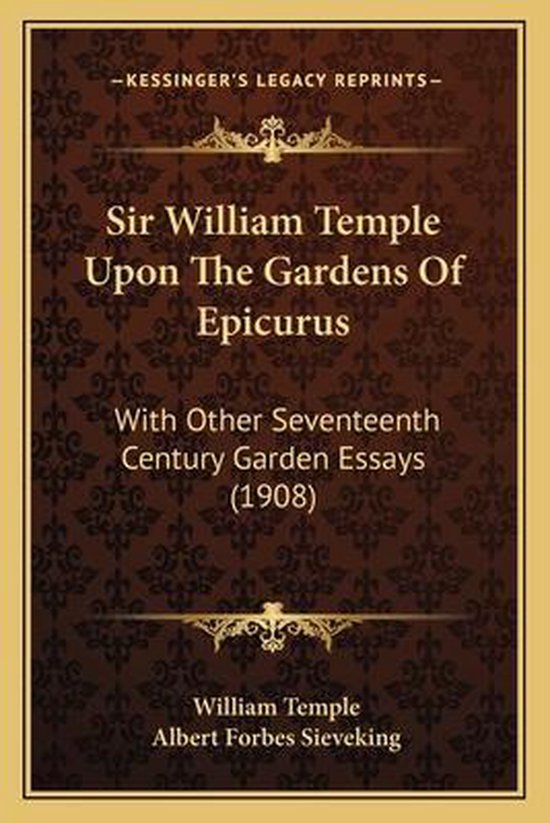
9781164926245 - Sir William Temple Upon the Gardens of Epicurus

Sir William Temple Upon the Gardens of Epicurus

Sir William Temple's 'Upon the Gardens of Epicurus' is a profound exploration of garden design and philosophy, reflecting the author's deep appreciation for nature and classical thought. Written in the 17th century, this work blends practical gardening advice with philosophical musings on the Epicurean pursuit of tranquility and pleasure. Temple draws on his experiences as a diplomat and scholar, offering insights into the gardens of ancient Greece and Rome, as well as contemporary European designs. He emphasizes the importance of harmony between art and nature, advocating for gardens that inspire contemplation and serenity. The book is not merely a manual but a literary journey through the aesthetics of landscape, where Temple discusses the symbolic meanings of plants, water features, and spatial arrangements. His prose is elegant and reflective, inviting readers to consider the garden as a microcosm of the ideal life. This edition, published by Kessinger Publishing, preserves the original text for modern audiences, making it a valuable resource for historians, gardeners, and philosophers alike. Temple's work remains a classic in garden literature, influencing later thinkers like Alexander Pope and Horace Walpole. Through his eyes, we see the garden as a retreat from the chaos of the world, a place where one can cultivate both plants and peace of mind.

Beschikbare exemplaren

€13.95
GOED
Auteur William Temple
ISBN 9781164926245
Bindwijze Paperback
Tags gardening philosophy landscape design Epicurus 17th century literature

Sir William Temple's 'Upon the Gardens of Epicurus' is a timeless classic that offers a unique blend of horticultural advice and philosophical reflection. One of its greatest strengths is Temple's elegant prose, which transforms practical gardening tips into a meditative experience. The book's exploration of Epicurean philosophy adds depth, encouraging readers to find joy and tranquility in their gardens. However, the work is not without its weaknesses. Temple's 17th-century perspective can feel dated, with some references to ancient authorities that may seem obscure to modern readers. Additionally, the book lacks detailed illustrations, which would have been helpful for visualizing the garden designs he describes. Despite these minor flaws, the book remains a gem for those interested in the history of garden design and the philosophical underpinnings of landscape architecture. Temple's insights into the harmony between nature and art are still relevant today, and his emphasis on the garden as a sanctuary for the soul resonates in our fast-paced world. This edition by Kessinger Publishing faithfully reproduces the original text, though it could benefit from a modern introduction to contextualize Temple's ideas. Overall, 'Upon the Gardens of Epicurus' is a must-read for garden enthusiasts and anyone seeking a deeper appreciation of the natural world. It earns a solid four stars for its literary merit and enduring wisdom.

In 'Sir William Temple Upon the Gardens of Epicurus', the author presents a comprehensive treatise on garden design intertwined with Epicurean philosophy. The book begins by discussing the origins of gardens in ancient times, referencing Epicurus's own garden where he taught his followers the pursuit of happiness through simple pleasures. Temple then examines various garden styles, from the formal layouts of the French to the naturalistic designs of the Chinese, advocating for a balance between order and wildness. He delves into the practical aspects of gardening, including soil preparation, plant selection, and the use of water features to create serene environments. Throughout the text, Temple emphasizes the garden as a place for intellectual and spiritual renewal, where one can escape the pressures of public life. He critiques the excesses of elaborate gardens, arguing for moderation and utility. The book also includes reflections on the seasons, the symbolism of specific plants, and the importance of solitude. Temple concludes by tying these elements back to Epicurean ideals, suggesting that a well-tended garden fosters a life of contentment and virtue. This summary captures the essence of Temple's work, which is as much a philosophical discourse as it is a gardening guide. The text is rich with historical anecdotes and personal observations, making it a captivating read for anyone interested in the intersection of nature, art, and philosophy.