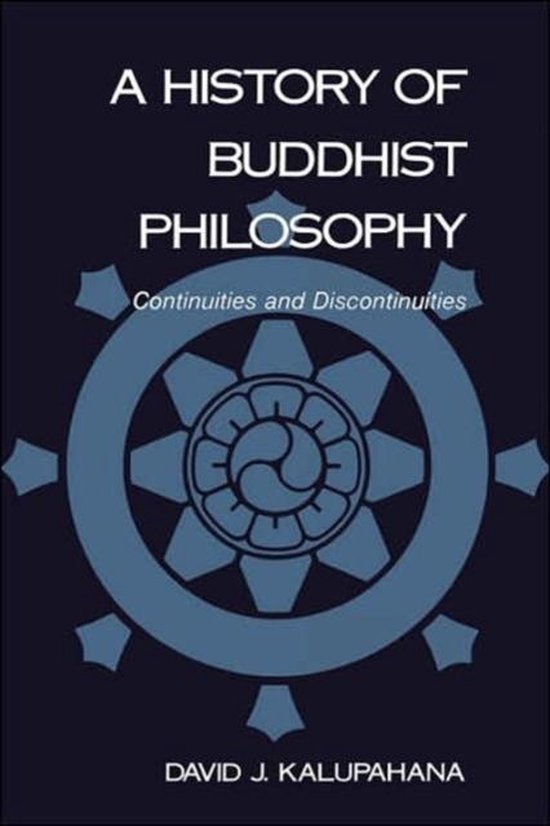
9780824814021 - A History of Buddhist Philosophy

A History of Buddhist Philosophy

A History of Buddhist Philosophy by David J. Kalupahana is a seminal work that delves deeply into the evolution and core tenets of Buddhist thought from its origins in ancient India to its diverse developments across Asia. This comprehensive text meticulously traces the philosophical underpinnings of Buddhism, starting with the foundational teachings of Siddhartha Gautama, the Buddha, and exploring key concepts such as the Four Noble Truths, the Noble Eightfold Path, and the doctrine of dependent origination. Kalupahana skillfully examines the historical contexts and intellectual debates that shaped early Buddhist schools, including the Theravada and Mahayana traditions, highlighting their unique contributions to metaphysics, epistemology, and ethics. The book also addresses the integration of Buddhist philosophy with other cultural and philosophical systems, such as those in China and Japan, and discusses modern interpretations and critiques. Through clear, scholarly prose, the author emphasizes the practical and experiential aspects of Buddhist philosophy, making it accessible to both academics and general readers interested in Eastern thought. This detailed exploration not only illuminates the richness of Buddhist intellectual history but also underscores its relevance to contemporary issues in philosophy, psychology, and ethics, providing a thorough resource for anyone seeking to understand the depth and breadth of this enduring tradition.

Beschikbare exemplaren

€14.95
GOED
Auteur David J. Kalupahana
ISBN 9780824814021
Bindwijze Hardcover
Tags Eastern philosophy Buddhist Philosophy David J. Kalupahana History of Buddhism Philosophical Traditions

A History of Buddhist Philosophy by David J. Kalupahana receives high praise for its thorough and accessible examination of Buddhist thought, making it an invaluable resource for students and scholars alike. One of its strongest points is the author's ability to present complex philosophical ideas in a clear, engaging manner, which helps demystify topics like emptiness and mindfulness for a broad audience. Kalupahana's meticulous research and balanced approach are evident as he covers both historical developments and modern interpretations, offering insights that bridge Eastern and Western philosophical traditions. However, some critics note that the book occasionally assumes a basic familiarity with Buddhist concepts, which might pose a challenge for complete beginners. Additionally, while the coverage is extensive, certain sections could benefit from more detailed examples or case studies to illustrate abstract theories. Despite these minor weaknesses, the work is lauded for its comprehensive scope and the way it contextualizes Buddhist philosophy within broader intellectual histories, fostering a deeper appreciation for its ethical and metaphysical dimensions. Overall, this book stands out as a reliable and insightful guide, though readers new to the subject may want to supplement it with introductory texts to fully grasp the nuances discussed.

A History of Buddhist Philosophy by David J. Kalupahana provides a detailed narrative of the development of Buddhist thought, beginning with the life and teachings of the Buddha in ancient India. The book explores foundational principles such as the Four Noble Truths, which address the nature of suffering and the path to liberation, and the concept of dependent origination, emphasizing the interconnectedness of all phenomena. Kalupahana traces the evolution of Buddhist schools, including the early Abhidharma analyses and the rise of Mahayana philosophies like Madhyamaka and Yogacara, which introduced ideas of emptiness and mind-only. The narrative extends to the spread of Buddhism across Asia, examining its adaptations in regions like China, where it blended with Daoist and Confucian ideas, and Japan, where Zen Buddhism flourished. Throughout, the author highlights key figures and texts that shaped these traditions, discussing their contributions to ethics, meditation practices, and epistemological debates. The book concludes by addressing modern reinterpretations and the global relevance of Buddhist philosophy in addressing contemporary issues, offering a cohesive overview that connects historical insights with ongoing philosophical inquiries, making it an essential read for understanding the enduring impact of Buddhist ideas on world thought.