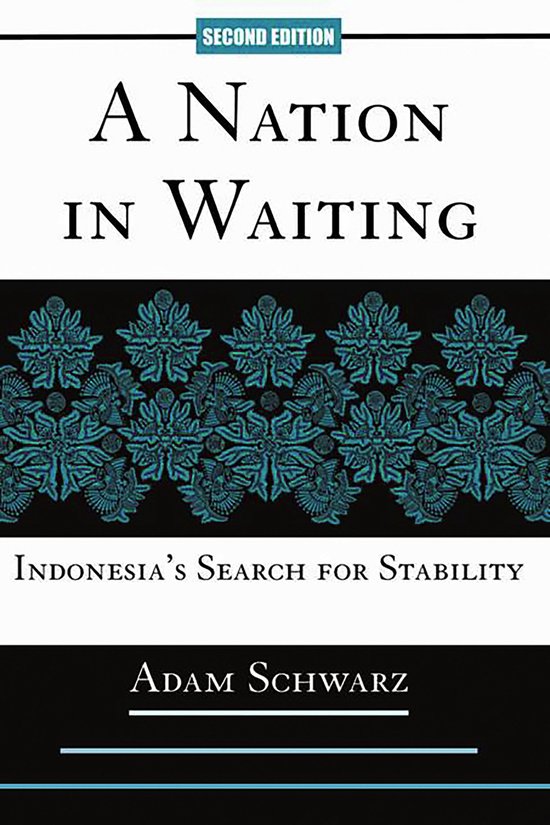
9780813336503 - A Nation in Waiting

A Nation in Waiting

A Nation in Waiting by Adam Schwarz is a comprehensive and insightful exploration of Indonesia's political and economic landscape during the late 20th century, focusing on the tumultuous period under President Suharto's New Order regime. Published in the 1990s, this book delves deep into the complexities of a nation grappling with rapid modernization, authoritarian rule, and the aspirations of its diverse population. Schwarz, an experienced journalist and scholar, provides a nuanced analysis of how Indonesia's rich cultural heritage and colonial past have shaped its contemporary struggles, including issues of corruption, economic disparity, and the quest for democratic reforms. The narrative weaves together historical context, personal anecdotes, and rigorous research to paint a vivid picture of a society in transition, highlighting key events such as the economic crises, social movements, and the eventual fall of Suharto. Through detailed examinations of political figures, business elites, and ordinary citizens, the book offers readers a profound understanding of the forces driving Indonesia's development and the challenges it faces on the global stage. It serves as an essential resource for anyone interested in Southeast Asian studies, political science, or international relations, making it a valuable addition to academic and personal libraries alike. Schwarz's engaging writing style ensures that complex topics are accessible, fostering a deeper appreciation for Indonesia's journey toward becoming a modern nation. This book not only informs but also inspires reflection on broader themes of governance, human rights, and cultural identity in a rapidly changing world.

Beschikbare exemplaren

€8.95
GOED
Auteur Adam Schwarz
ISBN 9780813336503
Bindwijze Paperback
Tags political history Indonesia Southeast Asia Economic Development Suharto

A Nation in Waiting by Adam Schwarz receives high praise for its thorough research and compelling narrative, which masterfully captures the essence of Indonesia's political evolution during a critical era. The book's strengths lie in its balanced approach, offering both critical analysis and empathetic insights into the lives of Indonesians affected by Suharto's regime. Schwarz's journalistic background shines through in his ability to present complex historical and economic data in an engaging manner, making it accessible to a broad audience without sacrificing depth. However, some critics point out weaknesses, such as a occasional bias towards Western perspectives that may overlook indigenous viewpoints, and the dense detail in certain sections that could overwhelm casual readers. Despite these minor flaws, the book is lauded for its timeliness and relevance, especially in understanding contemporary issues in Indonesia and Southeast Asia. It excels in highlighting the interplay between politics and economics, providing valuable lessons on nation-building and resilience. Readers appreciate the vivid character portrayals and the way Schwarz connects past events to present-day challenges, though a few note that the focus on elite politics sometimes overshadows grassroots movements. Overall, this work is considered a seminal text that enriches scholarly discourse and public understanding, earning it a place as a must-read for those delving into Indonesian history and global affairs.

A Nation in Waiting by Adam Schwarz provides a detailed summary of Indonesia's political and economic history from the 1960s to the late 1990s, centering on the rise and fall of President Suharto's authoritarian New Order regime. The book begins by setting the stage with Indonesia's colonial legacy and independence, then delves into Suharto's consolidation of power, economic policies that spurred growth but also entrenched corruption, and the social tensions that simmered beneath the surface. Key events include the 1965-66 mass killings, the oil boom of the 1970s, and the financial crises of the 1990s that led to widespread protests and Suharto's eventual resignation in 1998. Schwarz explores the roles of various actors, from military leaders and business tycoons to student activists and religious groups, illustrating how their interactions shaped the nation's trajectory. The narrative highlights Indonesia's struggles with democratization, human rights abuses, and economic inequality, while also noting moments of hope and reform. Through personal stories and analytical depth, the book captures the essence of a country in flux, emphasizing the resilience of its people and the ongoing quest for a more just society. It concludes by reflecting on the post-Suharto era, suggesting that Indonesia's future hinges on balancing tradition with modernization, making this summary a compelling overview for readers seeking to understand the nation's complex journey.