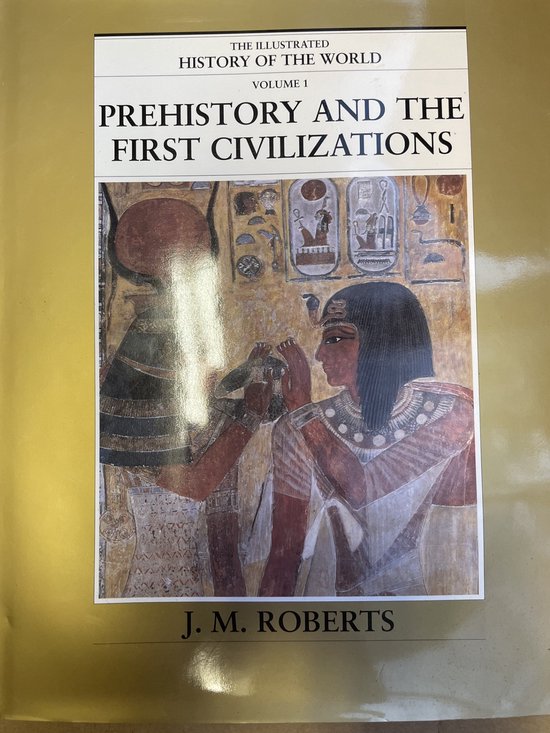
9780783563008 - The Illustrated History of the World Volume 1: Prehistory and the first civilizations

The Illustrated History of the World Volume 1: Prehistory and the first civilizations

"The Illustrated History of the World Volume 1: Prehistory and the First Civilizations" by Rachida Kharbouch is a masterfully crafted exploration of humanity's earliest epochs, designed to captivate readers with its rich narrative and stunning visual elements. This volume delves deep into the dawn of human existence, starting from the origins of our species in Africa, through the development of tool-making and social structures, and into the rise of the first great civilizations such as Mesopotamia, Ancient Egypt, the Indus Valley, and early China. Each chapter is meticulously researched, offering insights into archaeological discoveries, cultural evolutions, and the technological advancements that shaped these ancient societies. The book is enhanced with high-quality illustrations, maps, and photographs that bring these distant eras to life, making complex historical concepts accessible to both scholars and general readers. Kharbouch's engaging writing style weaves together facts and storytelling, highlighting key figures, daily life, religious practices, and the economic systems that defined these civilizations. This work not only educates but also inspires a deeper appreciation for our shared human heritage, emphasizing how these early innovations laid the groundwork for modern world history. It is an essential resource for anyone interested in understanding the roots of civilization, from the first hominids to the sophisticated empires that emerged along river valleys. With its comprehensive coverage and visual appeal, this book serves as a gateway to the past, encouraging readers to explore further and reflect on the enduring legacies of these foundational periods.

Beschikbare exemplaren

€8.95
GOED
Auteur Rachida Kharbouch
ISBN 9780783563008
Bindwijze Hardcover
Tags history Educational Resource Ancient Civilizations illustrated book Prehistory

"The Illustrated History of the World Volume 1: Prehistory and the First Civilizations" by Rachida Kharbouch receives high praise for its thorough research and engaging presentation, making it a standout in historical literature. One of its strongest points is the seamless integration of vivid illustrations with detailed textual explanations, which enhances comprehension and retention for readers of all levels. The book excels in covering a broad timeline, from the emergence of early humans to the complexities of ancient civilizations like Sumer and Egypt, providing a balanced view of social, political, and cultural developments. However, some critics note that the dense information can be overwhelming for casual readers, and the focus on certain regions, such as the Near East, might overshadow other important areas like pre-Columbian Americas. Despite this, the author's ability to distill complex archaeological findings into accessible narratives is commendable, and the use of primary sources adds authenticity to the accounts. On the downside, the book occasionally lacks in-depth analysis of controversial theories, which could leave advanced historians wanting more critical perspectives. Overall, it is a valuable educational tool that fosters a love for history, though readers should be prepared for its comprehensive scope. The high-quality production, including durable binding and glossy pages, further enhances its appeal, making it a worthwhile addition to any library, despite minor flaws in regional balance.

"The Illustrated History of the World Volume 1: Prehistory and the First Civilizations" by Rachida Kharbouch provides a comprehensive overview of human history from its earliest beginnings to the rise of initial complex societies. The narrative begins with the origins of Homo sapiens in Africa, detailing their migration across continents and the development of basic tools and social organizations during the Paleolithic era. It then transitions into the Neolithic Revolution, exploring the advent of agriculture, settled communities, and the domestication of plants and animals, which paved the way for more stable societies. The book vividly describes the emergence of the first civilizations, including Mesopotamia with its cuneiform writing and ziggurats, Ancient Egypt known for its pyramids and pharaonic rule, the Indus Valley Civilization with its advanced urban planning, and early Chinese dynasties along the Yellow River. Throughout, Kharbouch emphasizes key themes such as technological innovations, religious beliefs, and political structures, illustrating how these elements interconnected to form the foundations of modern human culture. The story culminates with the achievements and declines of these early empires, highlighting their contributions to art, science, and governance, and setting the stage for subsequent historical developments covered in later volumes. This summary captures the essence of the book's journey through millennia, offering readers a clear and engaging pathway to understanding our ancient past.