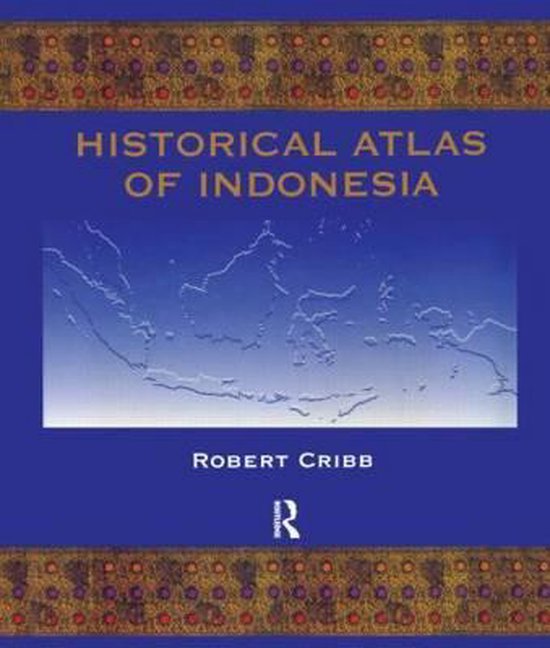
9780700709854 - An Atlas Of Indonesian History

An Atlas Of Indonesian History

An Atlas Of Indonesian History by Robert Cribb is a comprehensive and visually engaging exploration of Indonesia's rich and complex past, spanning from prehistoric times to the modern era. This meticulously researched atlas combines detailed maps with insightful narratives to illustrate the geographical, political, and cultural transformations that have shaped the archipelago. Each map is accompanied by thorough explanations, making it an invaluable resource for students, historians, and anyone interested in Southeast Asian history. The book covers key periods such as the rise of early kingdoms like Srivijaya and Majapahit, the spread of Islam, European colonization by the Portuguese, Dutch, and others, the struggle for independence, and the post-colonial developments including the Suharto era and beyond. Cribb's work stands out for its ability to contextualize historical events within their spatial dimensions, highlighting how Indonesia's diverse landscapes—from dense jungles to sprawling coastlines—have influenced settlement patterns, trade routes, and conflicts. With over 100 maps and numerous illustrations, the atlas not only details military campaigns and political boundaries but also delves into social and economic aspects, such as migration, resource exploitation, and cultural exchanges. It addresses the challenges of nation-building in a region marked by ethnic diversity and external influences, offering perspectives on how historical legacies continue to impact contemporary issues like governance and identity. The inclusion of timelines and thematic sections enhances its educational value, making complex topics accessible without oversimplification. Published by reputable academic presses, this book has been praised for its accuracy and depth, serving as a foundational text in university courses and research. Whether used for reference or casual reading, it provides a holistic view of Indonesia's evolution, emphasizing the interplay between human activity and the environment. In essence, An Atlas Of Indonesian History is more than just a collection of maps; it is a narrative tool that brings history to life, fostering a deeper appreciation for one of the world's most dynamic nations. Its detailed approach ensures that readers gain a nuanced understanding of the forces that have molded Indonesia, making it an essential addition to any library focused on global histories or Asian studies.

Beschikbare exemplaren

€68.95
GOED
Auteur Robert Cribb
ISBN 9780700709854
Bindwijze Hardcover
Tags colonialism Southeast Asia Historical Atlas Indonesian History Robert Cribb

An Atlas Of Indonesian History by Robert Cribb receives high praise for its exceptional clarity and thoroughness in presenting Indonesia's historical trajectory through cartographic means. One of its strongest points is the integration of detailed maps with comprehensive textual analysis, which allows readers to visualize complex historical events such as the spread of Islam or the Dutch colonial expansion in a way that pure narrative texts often fail to achieve. The maps are not only accurate but also aesthetically pleasing, enhancing the learning experience and making the book accessible to both academics and general enthusiasts. Additionally, Cribb's expertise shines through in the balanced coverage of various eras, from ancient civilizations to modern political shifts, providing a cohesive overview that highlights continuities and disruptions in Indonesian history. However, some weaknesses include the potential for information overload, as the dense content might overwhelm casual readers who are unfamiliar with Southeast Asian history. The focus on political and military history, while extensive, sometimes overshadows deeper explorations of social and cultural aspects, such as daily life or artistic developments, which could have enriched the narrative further. Another minor drawback is the occasional reliance on academic jargon, which may deter those seeking a more introductory text. Despite these points, the book's strengths far outweigh its limitations, as it serves as an authoritative reference that bridges gaps in historical understanding. The inclusion of timelines and thematic sections aids in organizing the material, though a more interactive or digital format could have improved engagement for modern audiences. Overall, this atlas is highly recommended for its educational value and meticulous research, though readers should be prepared for its scholarly tone. It stands as a testament to Cribb's dedication, offering insights that are both informative and thought-provoking, and it remains a vital resource for anyone looking to grasp the geographical underpinnings of Indonesia's past and present.

An Atlas Of Indonesian History by Robert Cribb provides a detailed chronological and geographical account of Indonesia's evolution, starting from its prehistoric origins through to contemporary times. The book begins by exploring the early human settlements and the rise of influential kingdoms like Srivijaya and Majapahit, which established trade networks and cultural exchanges across the archipelago. It then delves into the period of Islamic influence, detailing how religion spread and shaped societal structures, followed by the era of European colonization, where powers such as the Dutch imposed control, leading to significant economic and political changes. The narrative progresses to the struggle for independence in the mid-20th century, highlighting key figures and events that culminated in sovereignty, and continues into the post-independence era, covering the Sukarno and Suharto regimes, economic developments, and social transformations. Throughout, the atlas uses maps to illustrate territorial shifts, migration patterns, and conflict zones, emphasizing how geography has played a crucial role in Indonesia's history. Themes of unity and diversity are recurrent, as the book addresses the challenges of governing a nation with hundreds of ethnic groups and languages. It also touches on environmental factors, such as volcanic activity and maritime routes, that have influenced historical outcomes. By weaving together political, economic, and cultural threads, Cribb offers a holistic view that explains how past events have shaped modern Indonesia, including issues like regional autonomy and global integration. The summary concludes by reflecting on the enduring legacies of colonialism and the ongoing efforts to build a cohesive national identity, making it a compelling read for understanding the forces that continue to define Indonesia today.