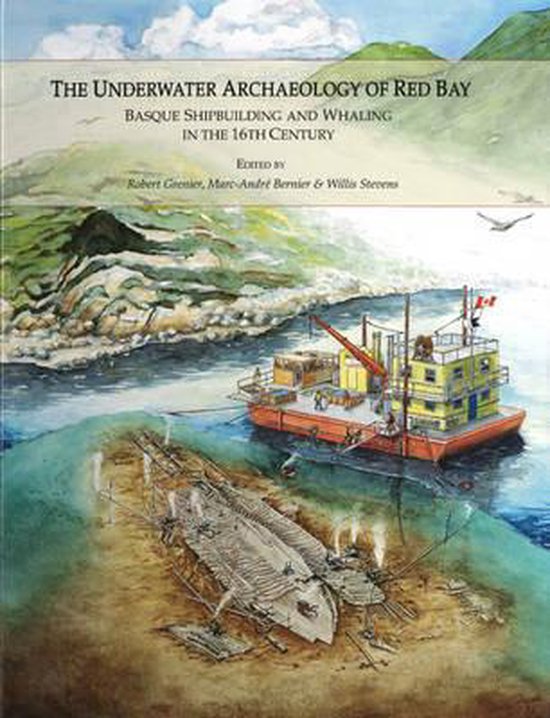
9780660196527 - The Underwater Archaeology of Red Bay

The Underwater Archaeology of Red Bay

The Underwater Archaeology of Red Bay, authored by Parks Canada, is a comprehensive exploration of one of the most significant underwater archaeological sites in North America, located in Red Bay, Labrador. This book delves into the rich history of 16th-century Basque whaling activities, detailing the discovery and excavation of shipwrecks, artifacts, and submerged landscapes that reveal the economic and cultural exchanges of the era. Through meticulous research and vivid descriptions, it covers the methods used in underwater archaeology, including diving techniques, artifact preservation, and the interpretation of findings that shed light on the daily lives of whalers. The narrative not only highlights the technological advancements in maritime archaeology but also emphasizes the importance of preserving underwater heritage for future generations. Readers are taken on a journey through time, exploring how these discoveries have reshaped our understanding of early European expansion in the New World, making it an invaluable resource for historians, archaeologists, and enthusiasts alike. The book is enriched with photographs, maps, and diagrams that illustrate the complexities of underwater excavations, providing a visual feast that complements the detailed textual analysis. By focusing on Red Bay's UNESCO World Heritage status, it underscores the global significance of the site and the collaborative efforts involved in its study, offering insights into the challenges and triumphs of underwater research in harsh environments.

Beschikbare exemplaren

€18.95
ALS NIEUW
Auteur Parks Canada
ISBN 9780660196527
Bindwijze Hardcover
Tags maritime history underwater archaeology Red Bay Basque whaling Parks Canada

The Underwater Archaeology of Red Bay by Parks Canada is a masterfully crafted work that excels in its thorough documentation and engaging storytelling, making it a standout in the field of maritime history. Its strengths lie in the detailed accounts of archaeological methodologies, which are presented in an accessible manner, allowing both experts and lay readers to appreciate the intricacies of underwater excavations. The book's use of high-quality visuals, such as photographs and illustrations, enhances the narrative, providing clear context for the artifacts and sites discussed. However, one weakness is its occasional dense academic tone, which might deter casual readers seeking a lighter read; the text can be overly technical in sections, potentially limiting its appeal to a broader audience. Additionally, while the focus on Red Bay is comprehensive, some readers might desire more comparative analysis with other underwater sites to better situate its uniqueness. Despite this, the book's meticulous research and commitment to accuracy are commendable, offering valuable insights into Basque whaling history and the preservation of cultural heritage. It serves as an essential reference for anyone interested in archaeology or maritime studies, though those new to the subject may need to supplement with additional resources for full comprehension. Overall, it balances educational depth with visual appeal, though a more streamlined narrative could improve readability for non-specialists.

The Underwater Archaeology of Red Bay by Parks Canada provides a detailed summary of the archaeological investigations at Red Bay, Labrador, a site renowned for its 16th-century Basque whaling heritage. The book begins by setting the historical context, describing how Basque mariners established seasonal whaling stations in the 1500s, leading to the discovery of numerous shipwrecks, including the well-preserved San Juan. It then chronicles the excavation processes, highlighting the challenges of working in cold, underwater environments and the techniques used to recover artifacts like pottery, tools, and whale bones. Key findings are explored, such as the insights into whaling techniques, trade networks, and the daily lives of the whalers, which reveal a complex intercultural exchange between Europeans and Indigenous peoples. The narrative progresses to discuss the conservation efforts and the site's designation as a UNESCO World Heritage site, emphasizing its global importance. Throughout, the book weaves together historical records, archaeological evidence, and scientific analysis to paint a vivid picture of this underwater treasure, concluding with reflections on the future of maritime archaeology and the lessons learned from Red Bay for preserving similar sites worldwide.