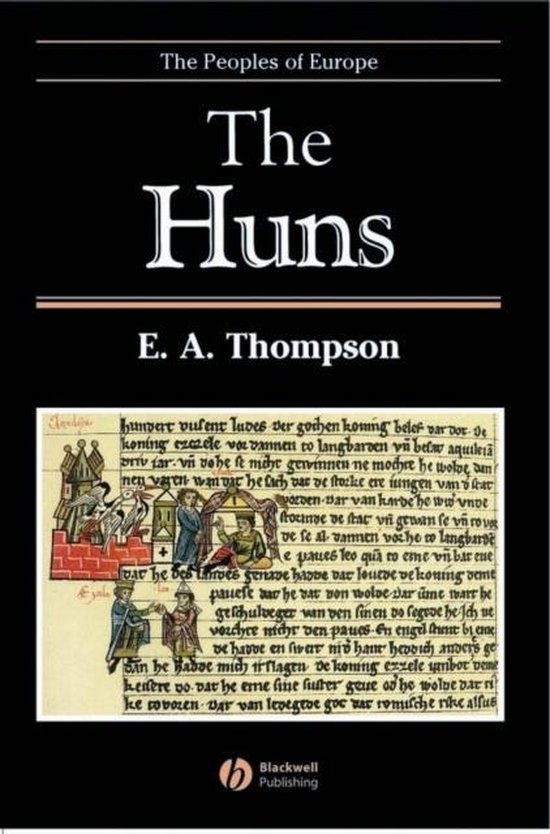
9780631214434 - The Huns

The Huns

Peter J. Heather's 'The Huns' is a masterful historical work that delves deep into the enigmatic world of the Hunnic Empire, exploring its origins, rise, and profound impact on the late Roman Empire and the broader transformation of Europe. Published as part of the 'Peoples of Europe' series, this book combines rigorous academic research with accessible narrative, making it an essential read for both scholars and general history enthusiasts. Heather begins by tracing the Huns' mysterious beginnings in Central Asia, examining the sparse archaeological and literary evidence that hints at their nomadic lifestyle and early migrations. He vividly describes their sudden appearance on the European stage in the 4th century, detailing how their arrival triggered massive population movements and destabilized the Roman frontiers. The author skillfully analyzes key figures like Attila, portraying him not merely as a barbarian scourge but as a complex leader who exploited Roman political divisions to build a short-lived but formidable empire. Heather emphasizes the Huns' military innovations, such as their expert horsemanship and composite bows, which gave them a tactical edge over more sedentary societies. The book also explores the socio-economic structures of Hunnic society, including their reliance on pastoralism, tribute systems, and alliances with various Germanic tribes. Through a critical examination of primary sources like Priscus and Ammianus Marcellinus, Heather addresses the biases and gaps in historical records, offering a balanced perspective on Hunnic brutality and diplomacy. He discusses the empire's rapid decline after Attila's death, linking it to internal strife and external pressures from the Romans and other groups. Furthermore, the work situates the Huns within the broader context of the Migration Period, arguing that their incursions accelerated the fall of the Western Roman Empire and paved the way for medieval Europe. Heather's engaging prose brings to life the chaos and creativity of this era, highlighting how Hunnic interactions reshaped cultural and political landscapes. The book concludes by reflecting on the Huns' legacy in European history and historiography, noting how they have been mythologized over centuries. With its comprehensive analysis and compelling storytelling, 'The Huns' serves as a pivotal resource for understanding one of history's most influential nomadic peoples.

Beschikbare exemplaren

€16.95
GOED
Auteur Peter J. Heather
ISBN 9780631214434
Bindwijze Paperback
Tags history Roman Empire Huns Peter J. Heather Migration Period

Peter J. Heather's 'The Huns' receives high praise for its scholarly depth and engaging narrative, making complex historical themes accessible to a wide audience. One of its strongest points is Heather's meticulous use of primary and secondary sources, which allows him to construct a nuanced portrait of the Huns that challenges simplistic stereotypes of barbaric invaders. He effectively balances military history with socio-cultural analysis, providing insights into Hunnic society, economy, and political strategies without overwhelming the reader. The book's exploration of Attila's leadership is particularly compelling, as Heather portrays him as a shrewd diplomat and strategist rather than a mere destroyer, adding layers of complexity to his character. Additionally, the integration of archaeological findings enriches the narrative, offering tangible evidence of Hunnic life and migrations. However, some weaknesses are noted; for instance, the heavy reliance on fragmentary historical records can lead to speculative conclusions in certain sections, which might frustrate readers seeking definitive answers. At times, the dense academic prose may feel challenging for casual readers, and the focus on high-level politics occasionally overshadows the everyday experiences of ordinary Huns and their subjects. Despite these minor drawbacks, the book excels in contextualizing the Huns within the broader sweep of European history, illustrating how their actions catalyzed the fall of Rome and the rise of new kingdoms. Heather's ability to weave together diverse threads of evidence into a coherent story is commendable, though a more detailed discussion of gender roles or cultural exchanges with settled societies could have enhanced the analysis. Overall, 'The Huns' is a valuable contribution to historical literature, praised for its thorough research and thought-provoking arguments, though it may benefit from clearer summaries for non-specialists. It stands as an authoritative work that both informs and inspires further study of this pivotal era.

In 'The Huns,' Peter J. Heather provides a comprehensive overview of the Hunnic Empire's history, from its obscure origins in Central Asia to its dramatic impact on the late Roman world. The book begins by examining the Huns' early migrations and nomadic culture, highlighting how their arrival in Europe in the 4th century triggered widespread upheaval. Key events include their conflicts with the Roman Empire, where Heather details battles, treaties, and the role of leaders like Attila, who is depicted as a skilled ruler exploiting Roman weaknesses to expand his domain. The narrative covers the peak of Hunnic power under Attila, including his invasions of Gaul and Italy, and the diplomatic maneuvers that shaped alliances with Germanic tribes. Heather explores the empire's internal dynamics, such as its reliance on pastoral economy, tribute systems, and the integration of diverse peoples, while also addressing the scarcity of direct Hunnic sources by critically analyzing Roman accounts. The story progresses to the empire's rapid collapse after Attila's death, driven by succession disputes and renewed Roman resistance, leading to the dissolution of Hunnic authority and the dispersal of their followers. Throughout, Heather emphasizes the Huns' role in accelerating the decline of the Western Roman Empire and facilitating the transition to the Middle Ages, arguing that their movements reshaped European demographics and politics. The book concludes by reflecting on the Huns' legacy in historical memory, from ancient fears to modern interpretations, and their influence on subsequent European developments. By weaving together military, political, and social history, Heather offers a vivid and detailed account that captures the essence of this transformative period, making it an invaluable resource for understanding the forces that forged medieval Europe.