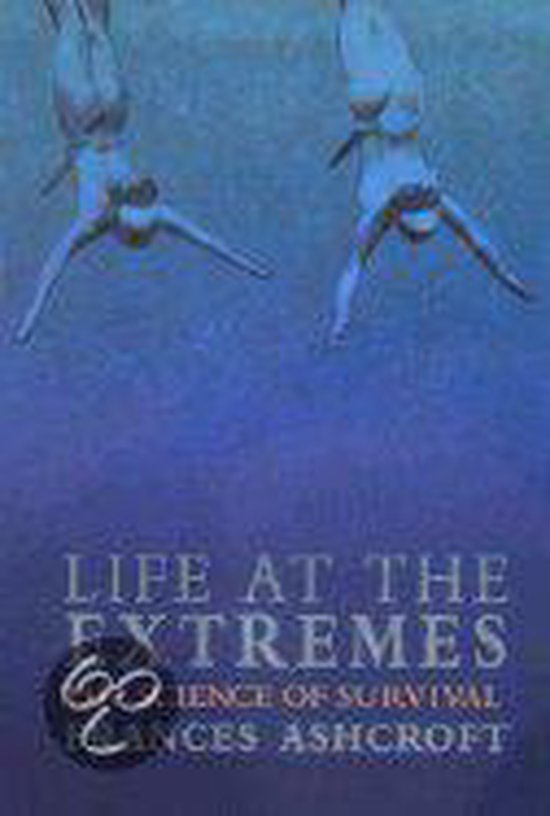
9780520222342 - Life at the Extremes

Life at the Extremes

Frances M. Ashcroft's 'Life at the Extremes' is a masterful exploration of how life adapts to the most challenging environments on Earth and beyond, delving into the physiological mechanisms that enable survival in conditions ranging from the deep ocean to outer space. This book combines rigorous scientific insight with engaging storytelling, making complex biological concepts accessible to a broad audience. Ashcroft, a renowned physiologist, draws on her extensive research to explain how organisms, including humans, cope with extreme temperatures, pressures, and altitudes, highlighting the incredible resilience of life. Through vivid examples, such as deep-sea creatures that withstand immense pressure and high-altitude climbers who adapt to low oxygen, the book illustrates the principles of homeostasis and evolution. It also addresses the implications for space exploration, discussing how understanding these extremes can inform future missions and the search for extraterrestrial life. The narrative is enriched with historical anecdotes and cutting-edge science, providing a comprehensive overview that appeals to both scientists and general readers interested in biology, adventure, and the limits of human endurance. By examining the interplay between genetics, environment, and adaptation, Ashcroft offers a thought-provoking perspective on what it means to live at the edge of possibility, emphasizing the importance of scientific inquiry in overcoming environmental challenges. This work not only educates but also inspires awe for the natural world's ingenuity, making it an essential read for anyone curious about the frontiers of life science.

Beschikbare exemplaren

€16.95
GOED
Auteur Frances M. Ashcroft
ISBN 9780520222342
Bindwijze Hardcover
Tags biology science book physiology adaptation extreme environments

Frances M. Ashcroft's 'Life at the Extremes' receives high praise for its ability to translate complex physiological concepts into an engaging and understandable narrative, making it a standout in popular science literature. The book's strengths lie in its thorough research and Ashcroft's clear, authoritative voice, which guides readers through fascinating examples of adaptation, such as how animals survive in deserts or the deep sea, without overwhelming them with jargon. However, some readers might find the depth of scientific detail occasionally dense, potentially slowing the pace for those seeking a lighter read. On the positive side, the inclusion of real-world applications, like insights into human space travel and medical advances, adds practical relevance and broadens its appeal. Criticisms could include a slight bias towards animal physiology over human-centric stories, which might limit engagement for some audiences, but overall, the book excels in balancing education with entertainment. Ashcroft's passion for the subject shines through, fostering a sense of wonder and curiosity, though a more varied structure with additional case studies could enhance its dynamism. In summary, while it demands attention, the rewards are substantial, offering a compelling look at life's resilience that is both informative and inspiring, despite minor flaws in accessibility for complete novices.

In 'Life at the Extremes,' Frances M. Ashcroft provides a comprehensive overview of how living organisms adapt to harsh environments, starting with an introduction to physiological principles and moving through various extremes like high altitudes, deep oceans, and extreme temperatures. The book details the mechanisms of adaptation, such as thermoregulation in Arctic animals or pressure resistance in deep-sea species, using examples from both human and animal biology. Ashcroft explores the evolutionary underpinnings of these traits, explaining how natural selection favors survival in niche habitats, and delves into human endeavors, such as mountaineering and space exploration, where these adaptations are crucial. She discusses the role of genetics, biochemistry, and behavior in overcoming environmental stresses, highlighting case studies like the bar-headed goose's high-altitude flight or the tardigrade's ability to endure vacuum conditions. The narrative builds to address broader implications, including how this knowledge informs biotechnology, medicine, and the potential for life on other planets, emphasizing the interconnectedness of life sciences. Through a blend of historical context and modern research, Ashcroft crafts a story that is both educational and thrilling, ultimately conveying a message of resilience and the endless possibilities of scientific discovery in understanding life's limits.