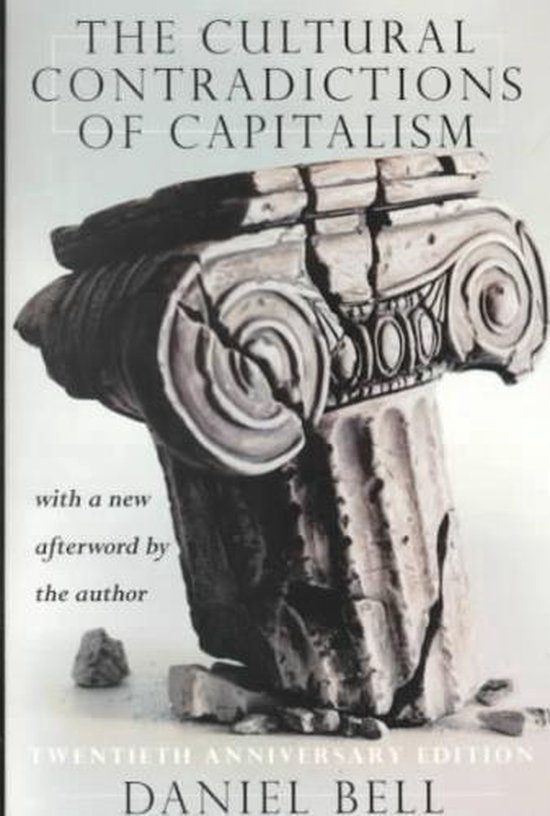
9780465014996 - The Cultural Contradictions Of Capitalism

The Cultural Contradictions Of Capitalism

In 'The Cultural Contradictions Of Capitalism', Daniel Bell presents a profound analysis of the inherent tensions within capitalist society. First published in 1976, this seminal work explores the clash between the economic and cultural realms of capitalism. Bell argues that capitalism is driven by two opposing principles: the economic realm emphasizes efficiency, rationality, and delayed gratification, while the cultural realm promotes hedonism, self-expression, and immediate gratification. This contradiction, he contends, leads to a crisis of values and social instability. Bell traces the historical evolution of these contradictions from the Protestant Ethic to modern consumer culture, examining how the shift from a production-oriented to a consumption-oriented society has eroded traditional values. He delves into the role of modernism, avant-garde art, and the counterculture in challenging bourgeois norms, ultimately creating a cultural environment that undermines the very work ethic and discipline that capitalism requires. The book also discusses the rise of a new class of knowledge workers and the impact of technology on social structures. Bell's insights remain strikingly relevant today, offering a critical perspective on the sustainability of capitalist societies. This edition includes a new afterword by the author, reflecting on the book's enduring significance. With its interdisciplinary approach combining sociology, economics, and cultural theory, 'The Cultural Contradictions Of Capitalism' is essential reading for anyone seeking to understand the complex dynamics of modern capitalism.


Beschikbare exemplaren

€16.95
GOED
Auteur Daniel Bell
ISBN 9780465014996
Bindwijze Paperback
Tags sociology culture capitalism economic theory Daniel Bell

Daniel Bell's 'The Cultural Contradictions Of Capitalism' is a thought-provoking and influential work that remains highly relevant decades after its initial publication. Bell masterfully dissects the paradox at the heart of capitalist societies: the tension between the ascetic, rational demands of production and the hedonistic, expressive impulses of consumption. His analysis is rigorous and well-researched, drawing from sociology, economics, and cultural history. One of the book's greatest strengths is its interdisciplinary approach, which allows Bell to connect disparate phenomena such as the Protestant Ethic, modern art, and consumer culture into a coherent narrative. However, the book can be dense and academically challenging, requiring careful reading to fully appreciate its arguments. Some critics have noted that Bell's perspective is somewhat pessimistic and may underestimate the adaptability of capitalism. Additionally, his focus on Western societies limits the scope of the analysis. Despite these weaknesses, the book offers invaluable insights into the cultural mechanisms that sustain and threaten capitalist systems. It is a must-read for students of sociology, economics, and cultural studies. The new afterword provides a thoughtful reflection on the book's legacy and contemporary relevance. Overall, 'The Cultural Contradictions Of Capitalism' is a classic that continues to provoke debate and inspire critical thinking about the future of modern society.

In 'The Cultural Contradictions Of Capitalism', Daniel Bell argues that capitalism is fundamentally torn between two contradictory sets of values: the economic realm requires discipline, hard work, and deferred gratification, while the cultural realm encourages pleasure, self-fulfillment, and immediate satisfaction. Bell traces the origins of this conflict to the Protestant Ethic, which provided the moral foundation for early capitalism, and its gradual erosion by the rise of consumer culture and modernism. He examines how the avant-garde movements of the early 20th century, such as cubism and surrealism, challenged traditional artistic norms and paved the way for a culture of experimentation and self-expression. This cultural shift was accelerated by the post-World War II economic boom, which created a society of abundance where mass consumption and hedonism became central. Bell argues that this cultural hedonism undermines the work ethic and social stability necessary for capitalism to function, leading to a crisis of values. He also explores the role of the new class of knowledge workers, who prioritize creativity and autonomy over traditional career paths, further exacerbating the contradiction. The book concludes by discussing the implications of these contradictions for the future of capitalism, suggesting that without a renewed sense of moral purpose, capitalist societies may face increasing social fragmentation and political instability. Bell's analysis is both a diagnosis of contemporary ills and a call for a reintegration of economic and cultural values. This summary captures the essence of his argument, which remains a cornerstone of social theory.