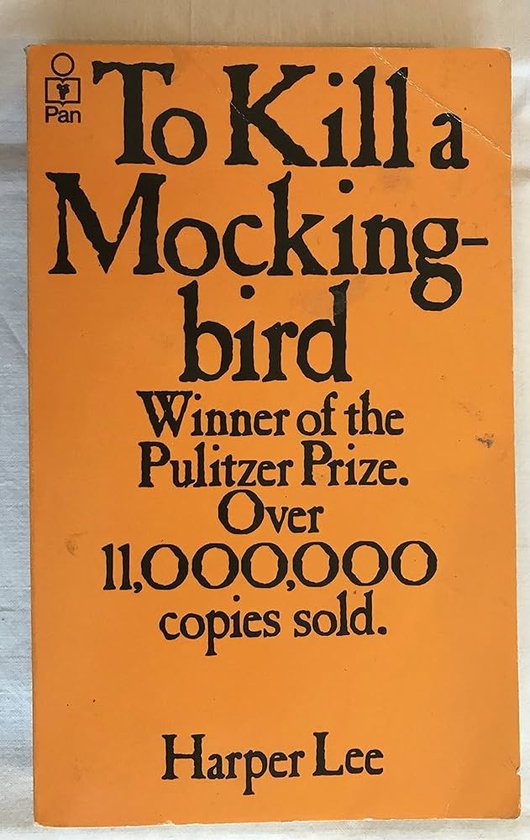
9780330241182 - To Kill a Mockingbird Paperback – Import, January 1, 1974 by Harper Lee (Author)

To Kill a Mockingbird Paperback – Import, January 1, 1974 by Harper Lee (Author)

  • Auteur
  • Uitgeverij-
  • Jaar-

To Kill a Mockingbird is a timeless novel by Harper Lee, first published in 1960 and still resonating with readers today. This paperback edition, imported in 1974, presents the Pulitzer Prize-winning story set in the fictional town of Maycomb, Alabama, during the Great Depression. The narrative is told through the eyes of young Scout Finch, who learns about racial injustice and moral courage as her father, attorney Atticus Finch, defends a black man falsely accused of raping a white woman. The novel explores themes of prejudice, empathy, and the loss of innocence, with iconic characters like the reclusive Boo Radley. Lee's masterful prose captures the complexities of human nature and social inequality, making the book a staple in American literature. This edition is perfect for collectors or those wanting to experience this classic. With over 40 million copies sold worldwide, it remains a powerful commentary on race and justice that is as relevant today as when it was written. The story's impact on readers is profound, offering lessons in integrity and understanding. Whether you are reading it for the first time or revisiting it, To Kill a Mockingbird is a must-have for any bookshelf. Its enduring legacy is a testament to Harper Lee's genius and the universal truths she so eloquently portrayed.

Beschikbare exemplaren

€12.95
REDELIJK
Verkleuring van de pagina's. Verder is het boek in prima staat.
To Kill a Mockingbird is a masterpiece that deserves its place in literary history. Harper Lee's writing is both elegant and accessible, drawing readers into the world of Maycomb with vivid descriptions and authentic dialogue. The character of Atticus Finch is a beacon of morality, and his defense of Tom Robinson is a gripping courtroom drama that highlights the deep-seated racism of the era. Scout's perspective adds a layer of innocence that makes the harsh realities even more poignant. However, the novel is not without flaws. Some modern readers may find the pacing slow in parts, and the use of racial language, while historically accurate, can be jarring. Additionally, the subplot involving Boo Radley feels somewhat underdeveloped, though it serves as a powerful metaphor for misunderstood goodness. Despite these minor criticisms, the book's strengths far outweigh its weaknesses. It is a thought-provoking exploration of empathy, courage, and social justice that continues to inspire generations. This edition, with its classic cover and sturdy paperback binding, is a reliable copy for any reader. I highly recommend it for students, book clubs, and anyone seeking a deeper understanding of human nature. A five-star read that will stay with you long after the last page.
To Kill a Mockingbird is set in the sleepy Southern town of Maycomb, Alabama, during the 1930s. The story is narrated by Jean Louise 'Scout' Finch, a young girl living with her older brother Jem and their widowed father, Atticus Finch, a respected lawyer. The first part of the novel focuses on Scout and Jem's childhood adventures and their fascination with their reclusive neighbor, Arthur 'Boo' Radley. They attempt to lure him out of his house, but their games are halted when Atticus takes on a controversial case. He is appointed to defend Tom Robinson, a black man accused of raping Mayella Ewell, a white woman. Despite overwhelming evidence of Tom's innocence, the town's racial prejudice runs deep. Atticus faces criticism and threats from the community, including from Bob Ewell, Mayella's abusive father. During the trial, Atticus proves that Mayella was beaten by her father, not Tom, but the all-white jury still convicts Tom. Later, Tom is killed while trying to escape prison. Bob Ewell, humiliated by the trial, vows revenge on Atticus and his children. One night, he attacks Scout and Jem as they walk home from a school pageant. Boo Radley emerges from his house to save them, killing Ewell in the struggle. Scout finally meets Boo, realizing he is not a monster but a kind soul who protected them. The novel ends with Atticus tucking Scout into bed, reflecting on the importance of understanding others by stepping into their shoes.