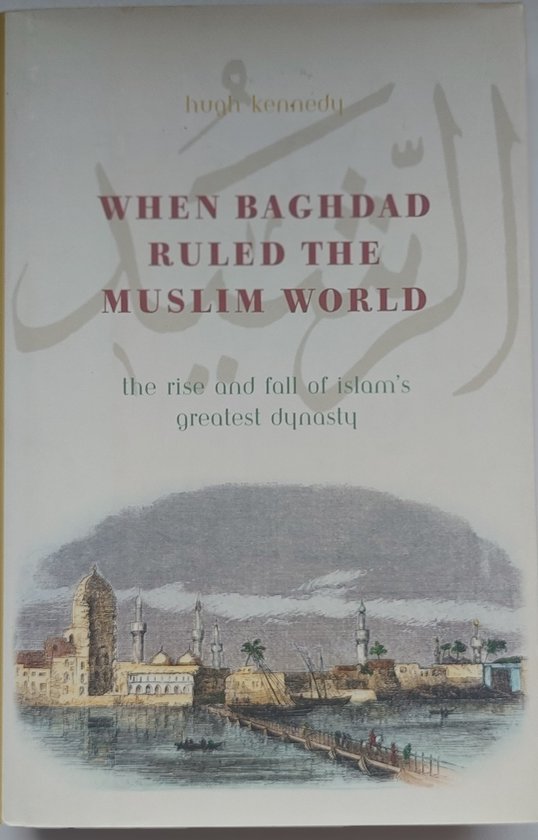
9780306814358 - When Baghdad Ruled The Muslim World

When Baghdad Ruled The Muslim World

When Baghdad Ruled The Muslim World by Hugh Kennedy is a masterful historical narrative that delves into the golden age of the Abbasid Caliphate, a period when Baghdad emerged as the epicenter of Islamic civilization, culture, and power. This book meticulously chronicles the rise and reign of the Abbasid dynasty from the mid-8th to the 10th centuries, highlighting how Baghdad, founded in 762 by Caliph al-Mansur, became a beacon of intellectual and political might. Kennedy vividly portrays the city's transformation into a cosmopolitan hub, where scholars, poets, and scientists from diverse backgrounds converged, fostering unprecedented advancements in fields such as medicine, astronomy, mathematics, and philosophy. The narrative explores the lives of influential caliphs like Harun al-Rashid and al-Ma'mun, whose courts were famed for their opulence and patronage of the arts, as well as the intricate political machinations, military campaigns, and administrative reforms that sustained the empire's dominance. Through rich archival research and engaging prose, the author illustrates how Baghdad's House of Wisdom became a symbol of knowledge preservation and innovation, translating Greek, Persian, and Indian texts that would later influence European Renaissance. Kennedy also addresses the internal strife, such as the civil wars and the rise of regional autonomies, that eventually led to the caliphate's fragmentation, while emphasizing the enduring legacy of this era in shaping modern Islamic identity and global history. This book not only recounts historical events but also analyzes the socio-economic structures, religious dynamics, and cultural exchanges that defined Abbasid rule, making it an essential read for anyone interested in the intersections of power, culture, and knowledge in the medieval world.

Beschikbare exemplaren

€10.95
GOED
Auteur Hugh Kennedy
ISBN 9780306814358
Bindwijze Hardcover
Tags cultural studies Historical Narrative Islamic history Abbasid Caliphate Medieval Civilization

Hugh Kennedy's When Baghdad Ruled The Muslim World is a compelling and well-researched account that excels in bringing the Abbasid Caliphate to life with vivid detail and scholarly rigor. One of its strongest points is Kennedy's ability to synthesize complex historical narratives into an accessible and engaging story, making it appealing to both academics and general readers. He masterfully highlights the cultural and intellectual achievements of the era, such as the translation movements and scientific innovations, which underscore Baghdad's role as a global center of learning. Additionally, the book's exploration of political dynamics, including the caliphs' strategies for maintaining power and dealing with internal rebellions, provides deep insights into the mechanisms of medieval governance. However, some weaknesses include a occasional overemphasis on elite political history, which might leave readers wanting more on the daily lives of common people or the broader social impacts. The narrative can also feel dense at times, with a wealth of names and dates that may overwhelm those unfamiliar with Islamic history. Despite this, Kennedy's use of primary sources and his balanced perspective on both the glories and declines of the Abbasid period add credibility and depth. The book's prose is generally clear and evocative, though it could benefit from more visual aids like maps to enhance spatial understanding. Overall, it stands as a significant contribution to historical literature, praised for its thoroughness but critiqued for its occasional lack of inclusivity in covering all facets of society, making it a must-read with minor reservations for enthusiasts of Islamic and world history.

When Baghdad Ruled The Muslim World by Hugh Kennedy offers a comprehensive summary of the Abbasid Caliphate's ascendancy, focusing on how Baghdad became the heart of the Muslim world from the 8th to the 10th centuries. The story begins with the Abbasid revolution that overthrew the Umayyad dynasty, leading to the establishment of Baghdad as the new capital under Caliph al-Mansur in 762. This city quickly grew into a magnificent metropolis, renowned for its circular design and strategic location, which facilitated trade and cultural exchange across continents. Kennedy details the reigns of key caliphs, such as Harun al-Rashid, whose court in Baghdad is immortalized in tales like the Thousand and One Nights, and al-Ma'mun, who championed the House of Wisdom, a grand library and research center that attracted scholars from various traditions. Under their rule, the caliphate experienced a golden age of intellectual flourishing, with advancements in science, medicine, and philosophy that were preserved and expanded through translations of Greek and Persian works. The narrative also covers the political challenges, including the civil war between al-Amin and al-Ma'mun, the rise of autonomous dynasties like the Buyids, and the gradual decline of central authority due to internal conflicts and external pressures from groups like the Seljuks. Throughout, Kennedy emphasizes how Baghdad's influence extended beyond politics to shape art, literature, and religious thought, leaving a lasting legacy that influenced subsequent Islamic empires and global history. The book concludes by reflecting on the caliphate's eventual fragmentation, but highlights its enduring impact on civilization, making this era a pivotal chapter in human history.