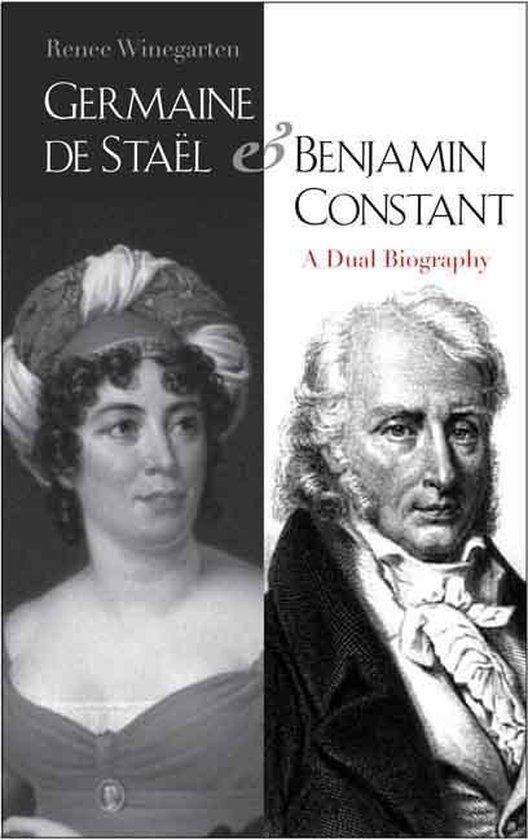
9780300119251 - Germaine de Stael and Benjamin Constant

Germaine de Stael and Benjamin Constant

In 'Germaine de Stael and Benjamin Constant,' Renee Winegarten explores the tumultuous relationship between two of the most influential intellectual figures of the French Romantic era. Germaine de Stael, a brilliant writer and salonnière, and Benjamin Constant, a political theorist and novelist, shared a passionate and often fraught liaison that spanned over two decades. Winegarten delves into their personal correspondence, literary works, and political activities to illuminate how their intense bond shaped their individual contributions to literature and politics. De Stael, exiled by Napoleon for her liberal views, used her salon in Coppet as a hub for European intellectuals, while Constant became a leading figure in French liberalism. The book examines their conflicting personalities: de Stael's fiery, emotional nature versus Constant's analytical and melancholic temperament. Their relationship, marked by love, rivalry, and mutual influence, reflects the broader cultural and political upheavals of post-Revolutionary France. Winegarten also highlights de Stael's pioneering role as a female intellectual in a male-dominated society, and Constant's struggles with his own political ambitions and personal demons. Through meticulous research, the author provides a nuanced portrait of two remarkable individuals whose ideas on liberty, passion, and creativity continue to resonate. This biography is not only a dual portrait but also a window into the intellectual history of the early nineteenth century.

Beschikbare exemplaren

€16.95
GOED
Auteur Renee Winegarten
ISBN 9780300119251
Bindwijze Hardcover
Tags Biography intellectual history Germaine de Stael Benjamin Constant French Romanticism

Renee Winegarten's 'Germaine de Stael and Benjamin Constant' is a masterful dual biography that offers a rich, nuanced exploration of two complex figures. The book's greatest strength lies in its detailed analysis of their intellectual and emotional symbiosis, showing how their personal relationship fueled their literary and political achievements. Winegarten's prose is elegant and engaging, weaving together historical context with intimate details from letters and diaries. However, the book occasionally loses focus, delving into lengthy digressions on minor historical events that detract from the central narrative. Some readers may find the dense historical background overwhelming, especially those unfamiliar with the French Revolution and Napoleonic era. Additionally, while Winegarten admirably champions de Stael's contributions, she sometimes underplays Constant's own struggles and achievements, creating a slight imbalance. The biography excels in capturing the turbulent passion between the two, but it could have benefited from a more streamlined structure. Despite these minor flaws, the book is a valuable contribution to Romantic-era scholarship, offering fresh insights into the lives of two intellectuals who shaped modern European thought. It is a must-read for those interested in the intersection of personal relationships and intellectual history.

'Germaine de Stael and Benjamin Constant' by Renee Winegarten chronicles the intertwined lives of two towering figures of the French Romantic movement. Germaine de Stael, daughter of the Swiss banker Jacques Necker, rose to prominence as a novelist, essayist, and salon hostess. Her outspoken liberal views led to exile by Napoleon, during which she traveled across Europe and established the Coppet group, a circle of intellectuals. Benjamin Constant, a Swiss-born French politician and writer, is best known for his novel 'Adolphe' and his political writings on constitutional government. The two met in 1794 and began a passionate, tumultuous affair that lasted until de Stael's death in 1817. Their relationship was marked by intense intellectual collaboration and personal conflict. De Stael encouraged Constant's political career, while Constant influenced her literary style. They shared a commitment to individual liberty and opposed authoritarianism. However, their temperaments clashed: de Stael's exuberance contrasted with Constant's cynicism. The book traces their lives against the backdrop of the French Revolution, the Napoleonic Wars, and the Restoration. It highlights de Stael's resilience as a female intellectual and Constant's struggle with his own political ideals. Their correspondence reveals a deep, often painful bond that survived separations, betrayals, and reconciliations. Ultimately, Winegarten portrays their legacy as inseparable, with each influencing the other's work and ideas. The summary concludes with de Stael's death and Constant's subsequent political career, underscoring how their relationship defined an era.