9780275988760 - A Military History of the Ottomans

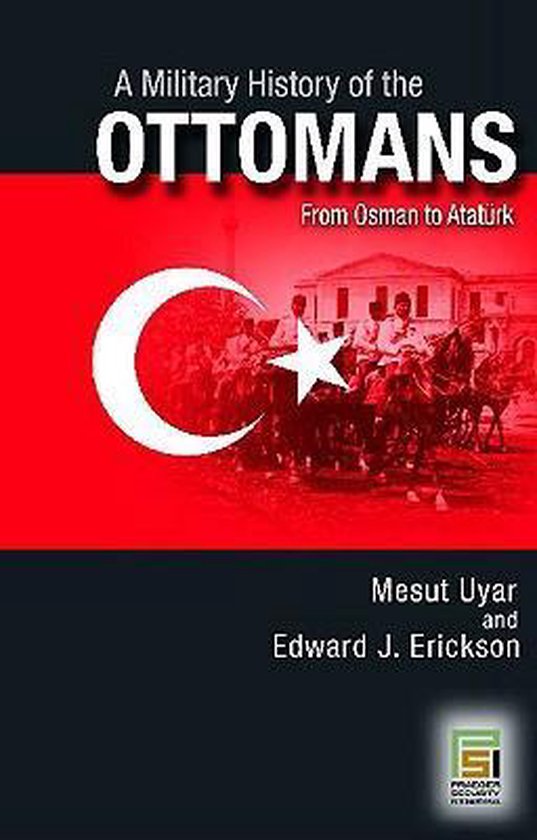
A Military History of the Ottomans

'A Military History of the Ottomans' by Mesut Uyar Ph.D. offers a comprehensive and scholarly examination of the Ottoman Empire's military evolution from its origins in the late 13th century to its dissolution after World War I. This book provides a detailed analysis of the Ottoman army's structure, organization, and strategies, highlighting how military innovations and adaptations enabled the empire to expand and sustain its power for over six centuries. The author delves into key battles, campaigns, and military reforms, placing them within the broader context of Ottoman political, social, and economic history. The book covers the classical period of Ottoman military dominance, the challenges of modernization, and the eventual decline, including the impact of European military advancements. It also explores the roles of various military units, such as the Janissaries, and the influence of military technology on warfare. With a focus on both land and naval forces, this work provides insights into the logistical, administrative, and tactical aspects of Ottoman warfare. Uyar's analysis is supported by extensive research and primary sources, making it a valuable resource for scholars, students, and military history enthusiasts. The book is well-structured, with clear chapters that guide the reader through different periods and themes. It balances narrative history with analytical depth, offering a nuanced understanding of the Ottoman military's strengths and weaknesses. This is an essential read for anyone interested in the military history of the Middle East, the Mediterranean, and the broader history of empires.


Beschikbare exemplaren

€52.95
GOED
Auteur Mesut Uyar Ph.D.
ISBN 9780275988760
Bindwijze Hardcover
Tags military history Ottoman Empire Mesut Uyar Janissaries Middle Eastern Warfare

Mesut Uyar's 'A Military History of the Ottomans' is an authoritative and engaging work that fills a significant gap in English-language scholarship. The book's greatest strength lies in its comprehensive scope, covering the entire span of Ottoman military history with meticulous detail. Uyar excels at contextualizing military developments within political and social frameworks, showing how the army was both a product and driver of imperial change. The analysis of the Janissary corps and the empire's adaptation to gunpowder technology is particularly insightful. However, the book's dense academic style may be challenging for casual readers, and some sections could benefit from more maps and illustrations to support the narrative. Additionally, while the author covers the later period of reform and decline thoroughly, the treatment of naval history is somewhat less detailed. Despite these minor shortcomings, the book is a valuable resource for its depth of research and clear argumentation. Uyar successfully challenges common stereotypes about Ottoman military backwardness, highlighting the empire's innovative approaches and the complex reasons for its eventual decline. The bibliography and notes are extensive, providing excellent avenues for further study. Overall, this is a highly recommended read for serious students of military history, offering a fresh perspective on a often misunderstood subject. It would be a strong addition to any academic library or enthusiast's collection.

'A Military History of the Ottomans' traces the military trajectory of the Ottoman Empire from its humble beginnings as a small beylik in Anatolia to its position as a formidable global power, and ultimately to its collapse. The book begins with the early Ottoman ghazi warriors and the conquest of Constantinople in 1453, which marked the empire's emergence as a major force. It then examines the classical period, when the Ottoman army was among the most effective in the world, utilizing a combination of cavalry, infantry, and artillery to expand across three continents. The narrative highlights the crucial role of the Janissaries, the elite slave-soldiers who were both a military and political force. As the empire reached its zenith under Suleiman the Magnificent, internal and external challenges began to emerge. The book explores the gradual military stagnation and the unsuccessful attempts at reform, such as the Tulip Period and the reforms of Selim III. The 19th century saw major efforts to modernize the army along European lines, including the abolition of the Janissaries and the establishment of modern military schools. However, these reforms came too late to prevent the empire's decline. The book covers the Ottoman participation in World War I, including the Gallipoli campaign and the Arab Revolt, leading to the empire's partition. Throughout, Uyar emphasizes the interplay between military institutions and broader societal changes, offering a nuanced perspective on the factors that shaped Ottoman military history. This summary captures the key turning points and themes, providing a clear overview for readers.