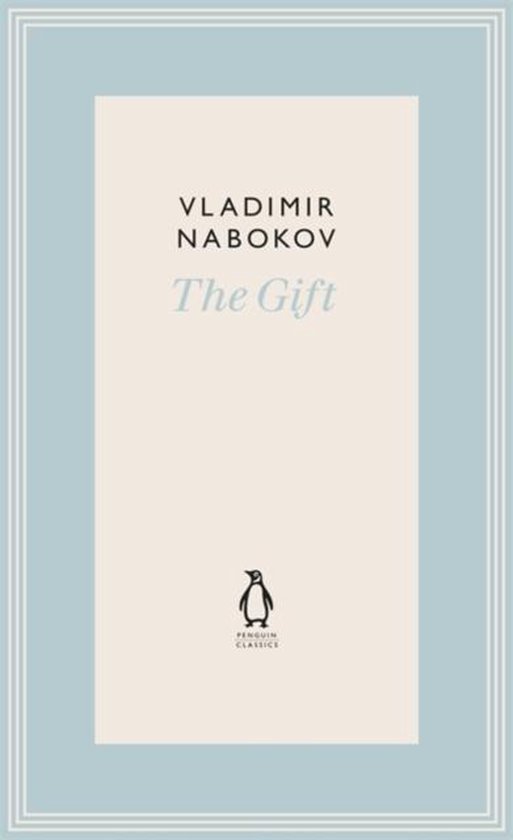
9780141196985 - The Gift

The Gift

In 'The Gift', Vladimir Nabokov's final Russian novel, the author crafts a masterful tapestry of exile, art, and memory. Set in 1920s Berlin among the Russian émigré community, the story follows Fyodor Godunov-Cherdyntsev, a young poet and aspiring writer. The novel is a complex, self-referential work that explores the nature of creativity and the relationship between life and art. Nabokov's prose, translated by himself and Michael Scammel, is rich with wordplay, literary allusions, and intricate narrative structures. The book is divided into five chapters, each blending autobiography, literary criticism, and fiction. Fyodor's quest to write a biography of his father, an explorer, mirrors his own search for identity and artistic voice. Along the way, he falls in love with Zina Mertz, and their romance is woven into the fabric of his artistic development. Nabokov employs a metafictional approach, where characters discuss literature and art, and the novel itself becomes a meditation on the gift of writing. The descriptions of Berlin are vivid, capturing the melancholy and hope of the diaspora. 'The Gift' is also a biting satire of literary pretensions and political ideologies, with a particularly sharp critique of the Soviet regime. The novel's conclusion, where Fyodor achieves a breakthrough in his writing, symbolizes the triumph of art over exile and loss. Nabokov's intricate style demands careful reading but rewards with profound insights into the creative process. This edition, part of Penguin Modern Classics, includes an introduction by Nabokov scholar Michael Wood, offering context for the novel's significance. For anyone interested in modernist literature, 'The Gift' is an essential read, showcasing Nabokov's genius before his later English-language masterpieces.

Beschikbare exemplaren

€17.95
GOED
Auteur Vladimir Nabokov
ISBN 9780141196985
Bindwijze Hardcover
Tags poetry Art exile Russian literature Vladimir Nabokov The Gift metafiction Berlin

Vladimir Nabokov's 'The Gift' is a dazzling yet demanding novel that showcases the author's unparalleled linguistic dexterity and narrative ingenuity. The book offers a rich exploration of artistic creation, exile, and love, all filtered through Nabokov's signature style of intricate wordplay and literary references. One of its greatest strengths is its layered structure, which seamlessly weaves together Fyodor's biography of his father, his own poetic endeavors, and his romance with Zina. This metafictional approach is intellectually stimulating and provides deep insights into the nature of art. The prose is exquisite, with Nabokov's descriptions of Berlin and the émigré life being particularly evocative. However, the novel's complexity can also be a weakness; readers unfamiliar with Russian literature or Nabokov's style may find it obscure and slow-paced. The frequent digressions and literary critiques can feel self-indulgent, and the narrative sometimes loses momentum. The character development, while deep, is centered almost entirely on Fyodor, leaving secondary characters somewhat flat. Additionally, the translation, though done by the author himself, may not fully capture the original Russian's nuances. Despite these challenges, 'The Gift' is a rewarding read for those who appreciate literary puzzles and dense prose. It stands as a testament to Nabokov's brilliance and his belief in the transcendent power of art. For fans of the author, it is an essential part of his oeuvre, but it may not be the best starting point for newcomers. Overall, 'The Gift' is a novel of great ambition and achievement, but it demands patience and intellectual engagement from its readers.

'The Gift' follows Fyodor Godunov-Cherdyntsev, a young Russian émigré poet living in Berlin in the 1920s. The novel traces his artistic development and personal life over the course of a year. Fyodor dreams of writing a biography of his father, a renowned explorer who died on a journey in Central Asia. He also falls in love with Zina Mertz, a fellow émigré who becomes his muse and partner. The narrative is structured in five chapters, each exploring different facets of Fyodor's life and work. In the first chapter, he reflects on his poetry and his family's past, including his father's expeditions. The second chapter delves into a literary circle of émigrés, satirizing their pretensions and political squabbles. The third chapter is a pivotal section where Fyodor writes a critical biography of the revolutionary writer Chernyshevsky, which is a scathing parody of socialist realism and ideological art. This section, a novel within the novel, showcases Nabokov's polemical wit. The fourth chapter shifts to Fyodor's growing relationship with Zina, blending romance with his artistic ambitions. The final chapter sees Fyodor achieving a breakthrough in his writing, completing a poem that synthesizes his experiences and artistic goals. The novel ends on a note of creative triumph, suggesting that the gift of writing can overcome exile and loss. Throughout, Nabokov employs a rich tapestry of literary allusions, self-referential commentary, and intricate wordplay. The book is as much about the process of writing as it is about the story itself, making it a seminal work of metafiction. 'The Gift' also offers a vivid portrait of the Russian diaspora in Berlin, capturing the tension between nostalgia for the past and the need to adapt to a new life. Ultimately, the novel is a celebration of the power of art to transform reality and preserve memory.