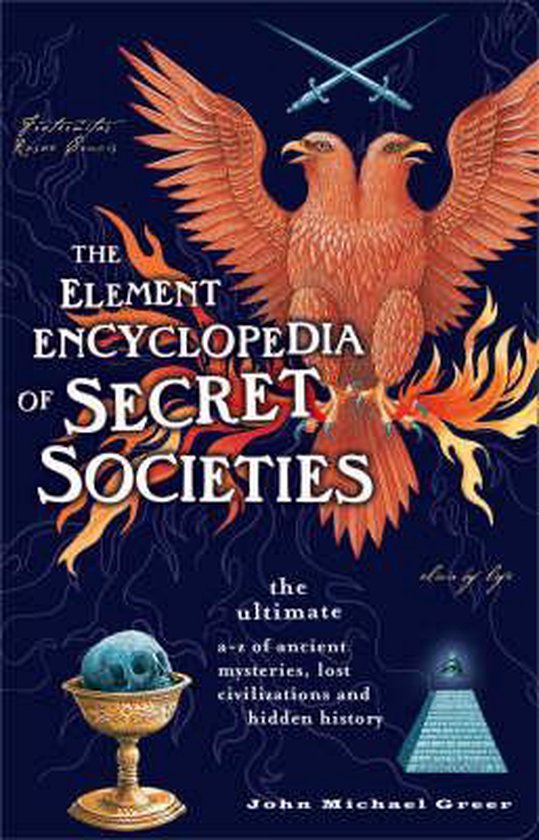
9780007298952 - The Element Encyclopedia of Secret Societies

The Element Encyclopedia of Secret Societies

The Element Encyclopedia of Secret Societies by John Michael Greer is a comprehensive and meticulously researched reference work that delves into the hidden histories and intricate workings of various clandestine organizations from around the world. This encyclopedia serves as an invaluable resource for historians, researchers, and enthusiasts fascinated by the covert groups that have shaped cultural, political, and spiritual landscapes throughout history. Greer, an esteemed author and scholar in esoteric traditions, brings a wealth of knowledge to this volume, ensuring that each entry is not only informative but also engaging, providing readers with deep insights into the origins, rituals, and influences of societies such as the Freemasons, the Illuminati, and the Rosicrucians. The book covers a broad spectrum, including ancient mystery schools, modern conspiracy groups, and everything in between, offering detailed explanations of their symbols, beliefs, and historical impacts. With its clear, accessible language and thorough cross-referencing, it allows readers to explore connections between different societies and understand their roles in major historical events. Whether you are a novice curious about secretive organizations or an expert seeking to expand your understanding, this encyclopedia provides a balanced perspective, avoiding sensationalism while highlighting the factual underpinnings of these often-misunderstood groups. It is an essential addition to any library focused on occult studies, history, or sociology, promising to enlighten and intrigue with every turn of the page.

Beschikbare exemplaren

€17.95
GOED
Auteur John Michael Greer
ISBN 9780007298952
Bindwijze Paperback
Tags secret societies encyclopedia John Michael Greer esoteric studies historical reference

The Element Encyclopedia of Secret Societies by John Michael Greer receives high praise for its exhaustive research and scholarly approach, making it a standout reference in the field of esoteric studies. One of its strongest points is the depth of information provided for each entry, which includes historical contexts, key figures, and detailed descriptions of rituals and symbols, allowing readers to gain a comprehensive understanding without oversimplification. Greer's writing is clear and engaging, avoiding the dry tone often found in academic texts, which makes the content accessible to a wide audience, from casual readers to serious researchers. However, a potential weakness lies in the sheer volume of information, which might overwhelm those new to the subject, as some entries assume a basic familiarity with occult terminology and historical events. Additionally, while the book aims for objectivity, some critics note that it occasionally leans towards a sympathetic view of certain societies, which could be seen as biased by those expecting a purely critical analysis. Despite this, the encyclopedia's strengths far outweigh its flaws, with its well-organized structure, extensive bibliography, and inclusion of lesser-known groups providing a rare and valuable perspective. It is highly recommended for anyone interested in the hidden aspects of history, though readers should be prepared for a dense read that rewards patience with profound insights.

The Element Encyclopedia of Secret Societies by John Michael Greer offers a detailed exploration of various clandestine organizations that have operated throughout history, providing readers with a thorough overview of their origins, beliefs, and impacts. The book is structured as an alphabetical reference, covering a wide range of groups from ancient times to the modern era, including well-known societies like the Freemasons and the Knights Templar, as well as obscure ones such as the Hermetic Order of the Golden Dawn. Each entry delves into the historical background, key members, rituals, and symbolic elements, weaving together narratives that reveal how these societies have influenced politics, culture, and spirituality. Greer emphasizes the interconnectedness of these groups, showing how ideas and practices have been transmitted across centuries and continents, often in secret. The encyclopedia also addresses common myths and conspiracy theories, offering evidence-based explanations to separate fact from fiction. Through this comprehensive approach, readers gain insight into the motivations behind these societies, whether they were focused on spiritual enlightenment, political change, or personal transformation. Overall, the book serves as a gateway to understanding the hidden forces that have shaped human history, encouraging further exploration and critical thinking about the role of secrecy in society.